So, Can Your Knees Actually Heal Themselves? Ayurveda Thinks So
Yes, with the right Ayurvedic treatment for knee pain, your knees can genuinely feel better without surgery, and no, we're not just saying that to make you feel good. There's real science (and a few thousand years of trial and error) backing it up. If you've been popping painkillers like candy every time you climb stairs, stick around; this one's for you.
Let's be honest, knees are dramatic. They creak, they crack, they swell up for no reason on a Tuesday, and they somehow always know exactly when you're about to stand up in a meeting. If you've been told your only options are "live with it" or "get it operated," take a breath. There's a middle path, and it's been around a lot longer than modern orthopedics.
Wait, Can Ayurveda Actually Regrow Cartilage?
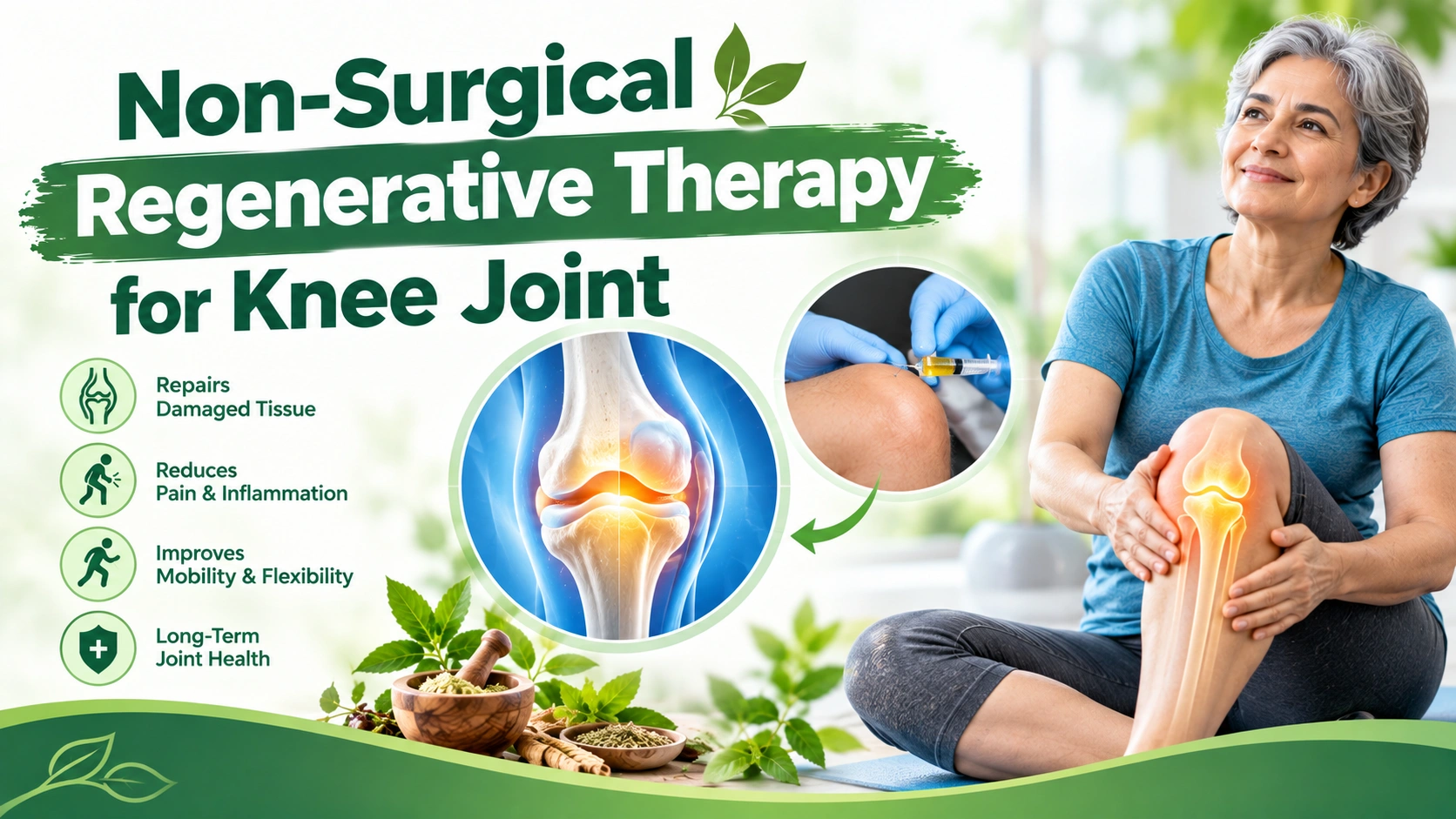
Let's not oversell it; Ayurveda isn't magic. But when it comes to knee cartilage regeneration Ayurveda-style, the approach isn't about forcing new cartilage to sprout overnight. It's about creating the internal environment where your joint can repair itself better, reduce inflammation, and slow further wear. Think of it less like a miracle potion and more like giving your knee a really good, consistent support system.
A 2018 randomized controlled trial published in Osteoarthritis and Cartilage compared multi-modal Ayurvedic treatment with conventional conservative care in 151 knee osteoarthritis patients across Germany. The study found that changes in symptom scores from baseline to 12 weeks were significantly more pronounced in the Ayurveda group compared to the conventional care group, with effects sustained at 6 and 12-month follow-ups. That's not folklore; that's a peer-reviewed trial with a control group and everything.
There's also a 2013 equivalence trial in Rheumatology comparing Ayurvedic herbal formulations against glucosamine and celecoxib (a common NSAID) in 440 patients. The formulations tested included extracts of Tinospora cordifolia, Zingiber officinale, Emblica officinalis, and Boswellia serrata against glucosamine sulphate and celecoxib in a randomized, double-blind trial spanning 24 weeks. Translation: Ayurveda held its own against actual pharmaceutical drugs. Not bad for something people assume is "just herbs and hope."
📩 Ask a Kidney Expert (Free 10-Min Consultation)
Knee Joint Treatment in Ayurveda: What Does It Actually Involve?
Knee joint treatment in ayurveda isn't a single pill; it's more like a full renovation project for your joints. Here's what typically goes into it:
- Panchakarma therapies like Janu Basti (a warm herbal oil pool held around the knee) to reduce stiffness and improve lubrication
- Snehana and Swedana (oil massage and herbal fomentation) to boost circulation and ease inflammation
- Herbal formulations tailored to your body type (dosha)
- Diet and lifestyle correction, because Ayurveda treats the whole body, not just the cranky joint
A study on Panchakarma therapy (snehan and swedan) in osteoarthritis patients found visible improvement in visual analogue pain scores and patient satisfaction after just 2 and 4 weeks of add-on treatment. So yes, oil massages aren't just for relaxation spas; they're legitimate therapy.
Best Herbs for Joint Pain (Nature's Little Multitaskers)
When people ask for the best medicine for knee pain in Ayurveda, herbs are usually where the conversation starts. Some of the best Ayurvedic herbs for knee troubles include:
- Shallaki (Boswellia serrata) – reduces inflammation like a champ
- Guggul – supports joint lubrication and mobility
- Ashwagandha – helps with pain and stress (because chronic pain is exhausting, mentally too)
- Rasna – a classic anti-inflammatory used specifically for joint disorders
- Nirgundi oil – for external application, great for stiffness
These form the backbone of most Ayurvedic knee cartilage treatment protocols, often combined into personalized formulations rather than given as one-size-fits-all tablets.
Home Remedies You Can Actually Try Tonight
You don't need a Himalayan retreat to start. Simple natural treatments for knee issues at home include:
- Warm sesame oil massage before a hot water compress
- Turmeric milk (yes, the golden latte your aunty swears by)
- Fenugreek seed water first thing in the morning
- Applying castor oil and wrapping the knee overnight
Yoga & Exercises: Move It (Gently) or Lose It
Movement sounds counterintuitive when your knee is screaming, but gentle, guided movement is often part of joint pain treatment in Ayurveda. Try:
- Tadasana (Mountain Pose) – improves alignment and weight distribution
- Setu Bandhasana (Bridge Pose) – strengthens muscles around the knee without loading the joint directly
- Walking in water – low-impact, high-benefit
- Gentle quadriceps strengthening (straight-leg raises) to support the joint like a natural knee brace
Diet Plan: Feed the Joint, Don't Feud with It
Your knee doesn't care about your diet culture drama, but it does care about inflammation. A good knee pain natural treatment diet includes warm, cooked, easily digestible foods, ghee in moderation, turmeric, ginger, and plenty of hydration, while cutting back on cold, processed, and excessively fried foods that aggravate Vata dosha (the one usually blamed for joint issues).
Ayurveda vs Conventional Approach: The Honest Comparison
| Factor | Ayurveda | Conventional |
| Speed of relief | Slower but steadier | Fast, sometimes too fast |
| Root cause focus | Yes, treats the whole system | Mostly symptom management |
| Side effects | Minimal when guided properly | Possible with long-term NSAID use |
| Commitment required | High (diet + lifestyle + herbs) | Low (just take the pill) |
| Long-term outlook | Often sustained improvement | Can plateau or need surgery later |
A Word About Dr. Puneet Dhawan
If you're navigating this space, you'll likely come across Dr. Puneet Dhawan, a well-regarded name in Ayurvedic joint care, known for combining classical Panchakarma protocols with a modern, evidence-informed approach to knee and joint disorders. His practice focuses on personalized treatment plans rather than generic herb-and-hope prescriptions, which honestly is refreshing in a space that sometimes gets a little too "one-size-fits-all."
Key Takeaways
- Ayurvedic treatment for knee pain treatment is backed by actual clinical trials, not just tradition
- Knee cartilage regeneration in Ayurveda focuses on creating a healing environment, not overnight miracles
- Best herbs for joint pain include Shallaki, Guggul, Ashwagandha, and Rasna
- Diet, yoga, and home remedies all work together; none of them alone is a magic bullet
- Consistency matters more than intensity in Ayurvedic healing
FAQs
Is Ayurvedic treatment effective for knee osteoarthritis?
Studies show it can significantly reduce pain and stiffness, often outperforming standard care in trials.
Can Ayurveda regenerate knee cartilage completely?
Not fully regenerate, but it can slow degeneration and improve joint function meaningfully.
What is the best Ayurvedic herb for knee pain?
Shallaki (Boswellia serrata) is one of the most well-researched anti-inflammatory herbs for joints.
How long does Ayurvedic knee treatment take to show results?
Most people notice improvement within 4 to 12 weeks with consistent therapy.
Is Ayurvedic treatment safe alongside conventional medicine?
Generally yes, but always consult a qualified practitioner before combining treatments.
Disclaimer:
This blog is for informational purposes only and isn't a substitute for professional medical advice. Please consult a qualified Ayurvedic practitioner or doctor before starting any new treatment, herb, or exercise regimen for your knee condition.