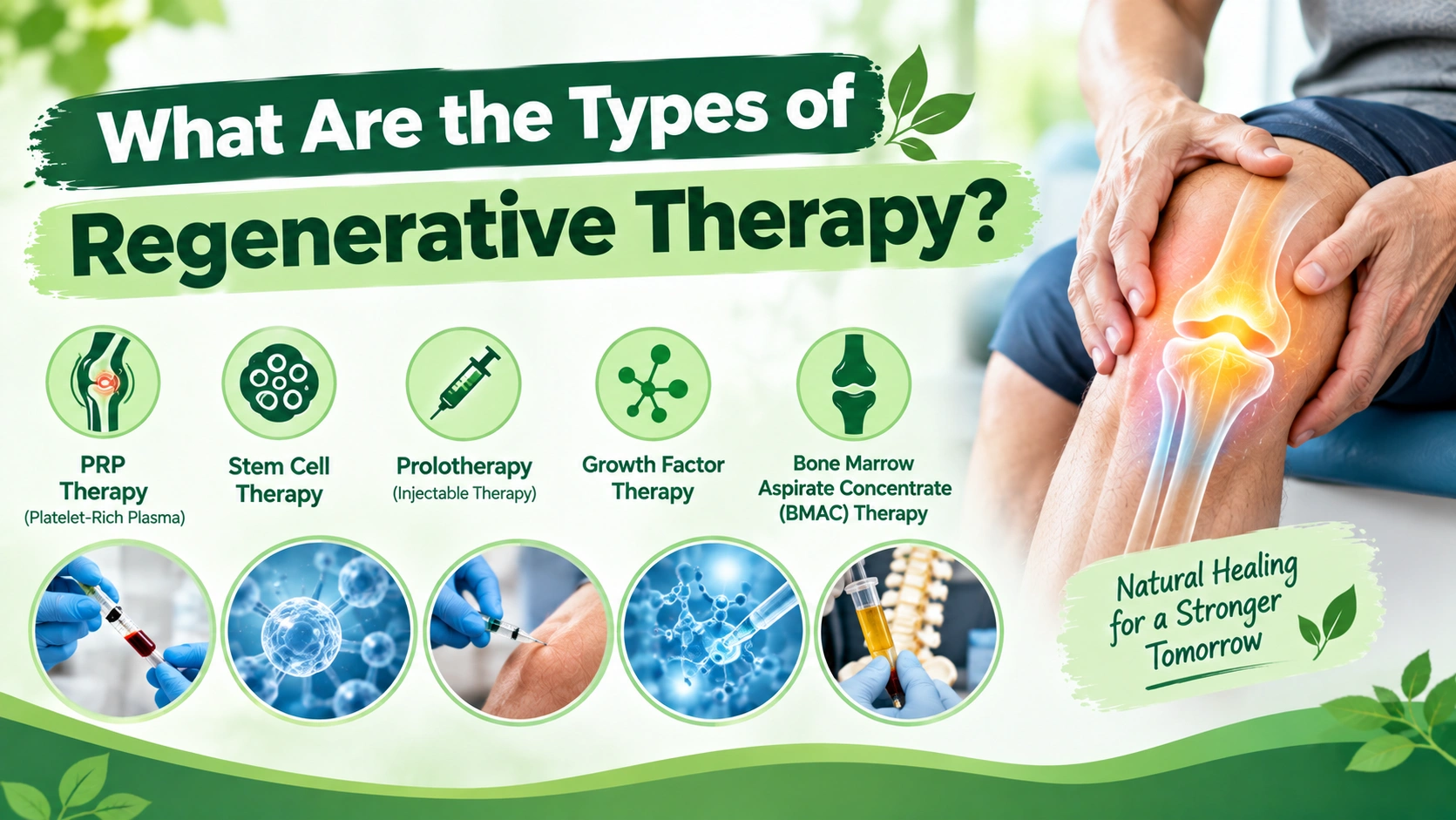
What Are the Types of Regenerative Therapy? A No-Nonsense Guide
The main types of regenerative therapies for knee issues include PRP, stem cell therapy, prolotherapy, hyaluronic acid injections, and yes, Ayurvedic regenerative approaches that have been quietly doing this job for centuries. If your knee has been sending you daily complaints and you're wondering what your actual options are beyond "just take a painkiller," this one's for you.
Regenerative therapy sounds like something out of a sci-fi movie; like your body is going to sprout a brand-new knee overnight. Spoiler: it won't. But the whole point of regenerative medicine, whether it's a fancy injection or a centuries-old herbal protocol, is to nudge your body's own healing machinery into working harder and smarter. Let's break down what's actually out there.
The Modern Lineup: What Doctors Usually Mean by "Regenerative Therapy"
When most orthopedic folks talk about regenerative therapy, they're usually referring to a handful of specific treatments:
- Platelet-Rich Plasma (PRP) – Your own blood, spun in a centrifuge to concentrate the platelets, then injected back into the knee to kickstart healing
- Mesenchymal Stem Cell Therapy (MSC) – Cells that can potentially turn into cartilage cells, usually sourced from bone marrow or fat tissue
- Bone Marrow Aspirate Concentrate (BMAC) – Stem cells harvested directly from your own bone marrow
- Prolotherapy – An irritant solution (often dextrose) injected to trigger a mild healing response
- Hyaluronic Acid Injections – Not exactly "regenerative" in the strictest sense, but often grouped here since it helps joint lubrication
A literature review covering 1,093 knee osteoarthritis patients across 23 studies found that both PRP and MSC treatments were well tolerated and effective, with PRP working better for milder cases (Kellgren-Lawrence grade I-II) and MSC showing more benefit in moderately advanced cases (grade II-III). So the "right" regenerative therapy really depends on how far along your knee troubles already are.
That said, it's not all sunshine and rainbows. A review of PRP research noted that with over 80 studies conducted, results have been mixed due to inconsistency in how PRP is prepared, which is why some major medical bodies remain cautious about strongly recommending it. Translate that as: promising, but not a guaranteed fix, and the science is still catching up.
📩 Ask a Kidney Expert (Free 10-Min Consultation)
So Where Does Ayurveda Fit Into "Regenerative Therapy"?
Here's the thing; long before PRP kits existed, knee joint treatment in Ayurveda was already working on the same core idea: help the body regenerate and repair itself rather than just masking pain. It's regenerative therapy's older, calmer cousin who doesn't need a centrifuge to make a point.
A randomized controlled trial published in Osteoarthritis and Cartilage (2018) compared complex Ayurvedic treatment with conventional conservative care in 151 knee osteoarthritis patients. Ayurveda group showed significantly more improvement in symptom scores over 12 weeks, and those benefits held steady even at the 6 and 12-month follow-up marks. That's the kind of long-game result modern injections are still trying to consistently replicate.
For ayurvedic knee cartilage treatment, the toolkit usually includes:
- Panchakarma therapies like Janu Basti (herbal oil pooling around the knee)
- Snehana & Swedana (oil massage plus herbal fomentation)
- Personalized herbal formulations based on your dosha
- Diet and lifestyle changes that reduce systemic inflammation
Comparison Table: Modern Regenerative Therapy vs Ayurveda
| Factor | Modern Regenerative (PRP/Stem Cell) | Ayurveda |
| Source of material | Your blood/fat/bone marrow | Herbs, oils, therapies |
| Cost | Usually higher, often not insured | Comparatively affordable |
| Session frequency | Few sessions, spaced out | Ongoing, consistent protocol |
| Speed | Can show faster short-term relief | Slower but steadier over months |
| Scientific consensus | Promising but still inconsistent | Growing evidence, traditionally established |
Best Herbs for Joint Pain (The Ayurvedic Toolbox)
If you're hunting for the best medicine for knee pain in ayurveda, herbs are non-negotiable. Some of the best ayurvedic herbs for knee support include:
- Shallaki (Boswellia serrata) – strong anti-inflammatory action
- Guggul – supports lubrication and mobility
- Rasna – classic go-to for joint disorders
- Ashwagandha – manages pain and the stress that comes with chronic discomfort
Home Remedies Worth Trying
Simple natural treatment for knee discomfort you can start at home:
- Warm sesame or castor oil massage before bed
- Turmeric milk daily
- Fenugreek seed water each morning
- Hot compress after oil application for extra relief
Yoga & Exercises for Joint Support
Movement matters, even when your knee disagrees. Helpful additions for joint pain treatment in ayurveda:
- Tadasana – improves posture and weight distribution
- Setu Bandhasana – strengthens surrounding muscles without stressing the joint
- Gentle straight-leg raises to build natural knee support
- Water walking for low-impact movement
Diet Plan for Happier Knees
For knee pain, natural treatment through food: favor warm, cooked meals, ginger, turmeric, and moderate ghee, while cutting back on cold, processed, and deep-fried foods that tend to aggravate joint inflammation.
A Word About Dr. Puneet Dhawan
In this space, Dr. Puneet Dhawan is often referenced for his work combining classical Ayurvedic protocols with a structured, evidence-informed approach to joint and knee care; favoring personalized treatment plans over generic herbal prescriptions, which makes a real difference for long-term outcomes.
Key Takeaways
- Types of regenerative therapies for knee issues include PRP, stem cells, BMAC, prolotherapy, and Ayurveda
- Modern injections show promise but still lack standardization across studies
- Knee cartilage regeneration Ayurveda approaches show sustained, long-term benefit in clinical trials
- Diet, yoga, and herbs work as a combined system, not standalone fixes
- Choosing the right therapy depends on how advanced the knee condition already is
FAQs
What are the main types of regenerative therapy for knees?
PRP, stem cell therapy, BMAC, prolotherapy, hyaluronic acid injections, and Ayurvedic regenerative treatments are the main options.
Is Ayurveda considered a form of regenerative therapy?
Yes, Ayurvedic treatments aim to support the body's natural healing and repair processes for the joint.
Which regenerative therapy works best for knee osteoarthritis?
It depends on severity; PRP tends to help milder cases, while stem cell therapy is often used for more advanced ones.
Are Ayurvedic treatments backed by scientific studies?
Yes, several randomized controlled trials have shown meaningful, sustained improvement with Ayurvedic knee protocols.
Is regenerative therapy a permanent cure for knee pain?
No treatment guarantees a permanent cure, but regenerative therapies can significantly slow progression and improve comfort.
Disclaimer:
This blog is for informational purposes only and does not replace professional medical advice. Please consult a qualified doctor or Ayurvedic practitioner before starting any regenerative therapy, herbal treatment, or exercise plan for your knee condition.