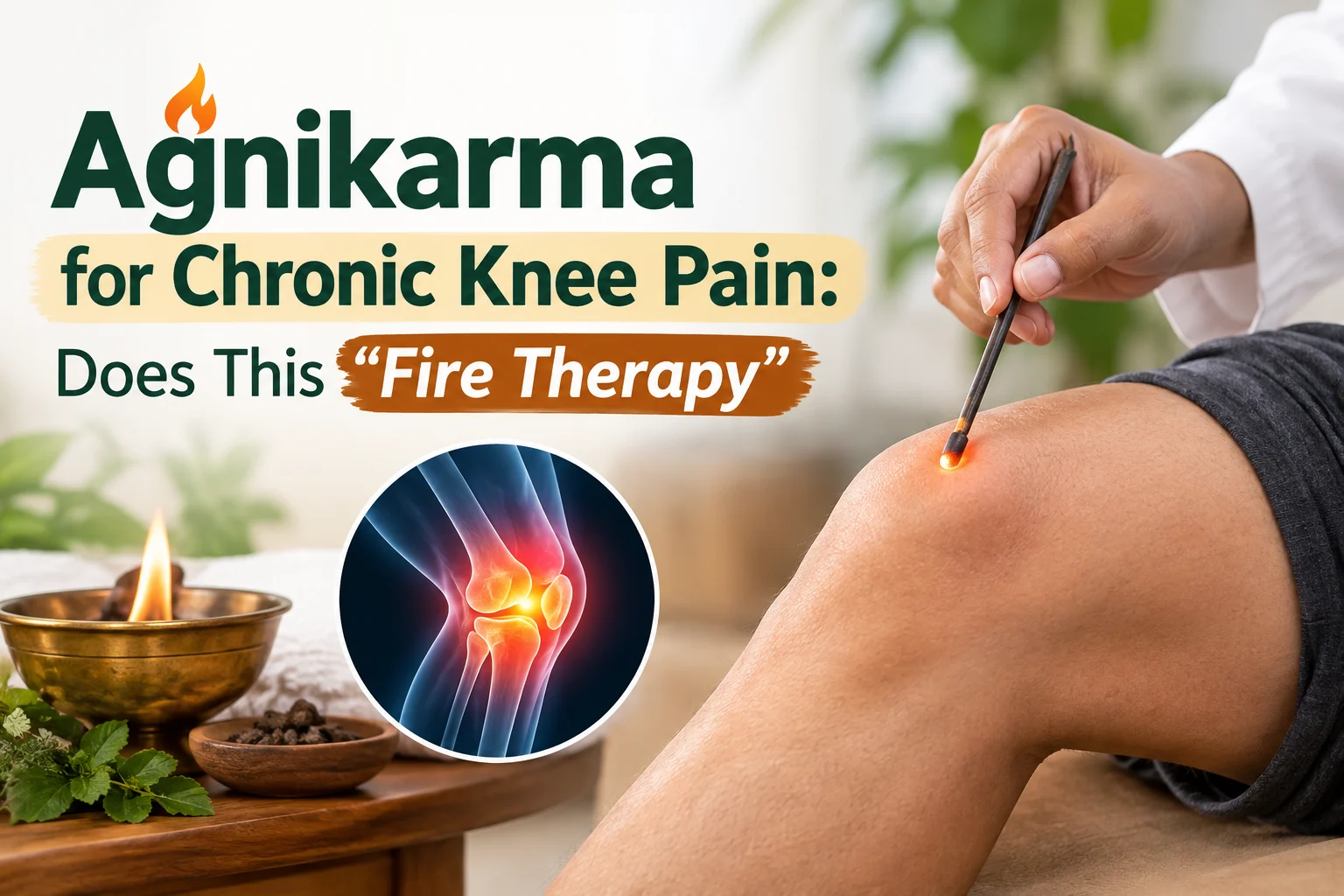
Yes, Agnikarma for Chronic Knee Pain actually helps, and no, nobody's coming near your knee with an actual flame. I know the name sounds dramatic (fire treatment, really?), but it's a controlled, quick, heat-based procedure that Ayurveda has been using for centuries, way before anyone had heard of an MRI machine.
I got curious about this because my own mother spent two years hopping between an orthopedic, a physiotherapist, and a knee brace that made her sound like a robot every time she walked. Painkillers helped for a bit, then stopped helping, then just gave her acidity as a bonus. Sound familiar? If you've been on this exact merry-go-round; hot bag, cold bag, some random oil from a WhatsApp forward, more painkillers; you already know how exhausting chronic knee pain gets. It's not even the pain sometimes. It's the constant managing of it.
So let's actually talk about Agnikarma for Chronic Knee Pain, what it does, why it's suddenly getting a lot of attention again, and whether it's worth trying before you resign yourself to a lifetime of knee braces.
Okay, But What Is Agnikarma, Really?
The word breaks down to "agni" (fire) and "karma" (action); fire action, basically. But don't picture torches or anything scary. In practice, a trained Vaidya uses a heated metal probe and touches it briefly to very specific points around the knee, for literally a couple of seconds at a time. That's it. The heat is meant to stimulate blood flow to the area and kickstart the body's own repair process, plus it interrupts the pain signal loop your nerves have gotten stuck in.
The Sushruta Samhita, one of the oldest surgical texts in the world, actually calls out fire therapy as the go-to for pain that keeps returning no matter what you do; which, honestly, describes chronic knee pain better than most modern medical textbooks manage to.
Why Do Knees Get Picked On So Much?
Because they're doing all the unglamorous work, that's why. Your knee is basically stuck between your hip telling it what to do and your ankle absorbing whatever's left of the shock. Years of walking, climbing stairs, that one badminton phase in your thirties, sitting cross-legged, squatting; it all adds up. By the time osteoarthritis or cartilage wear shows up, the knee's been quietly taking a beating for decades.
Naturally, the question everyone eventually asks is: can this actually be reversed, or are we just managing damage forever?
📩 Ask a Kidney Expert (Free 10-Min Consultation)
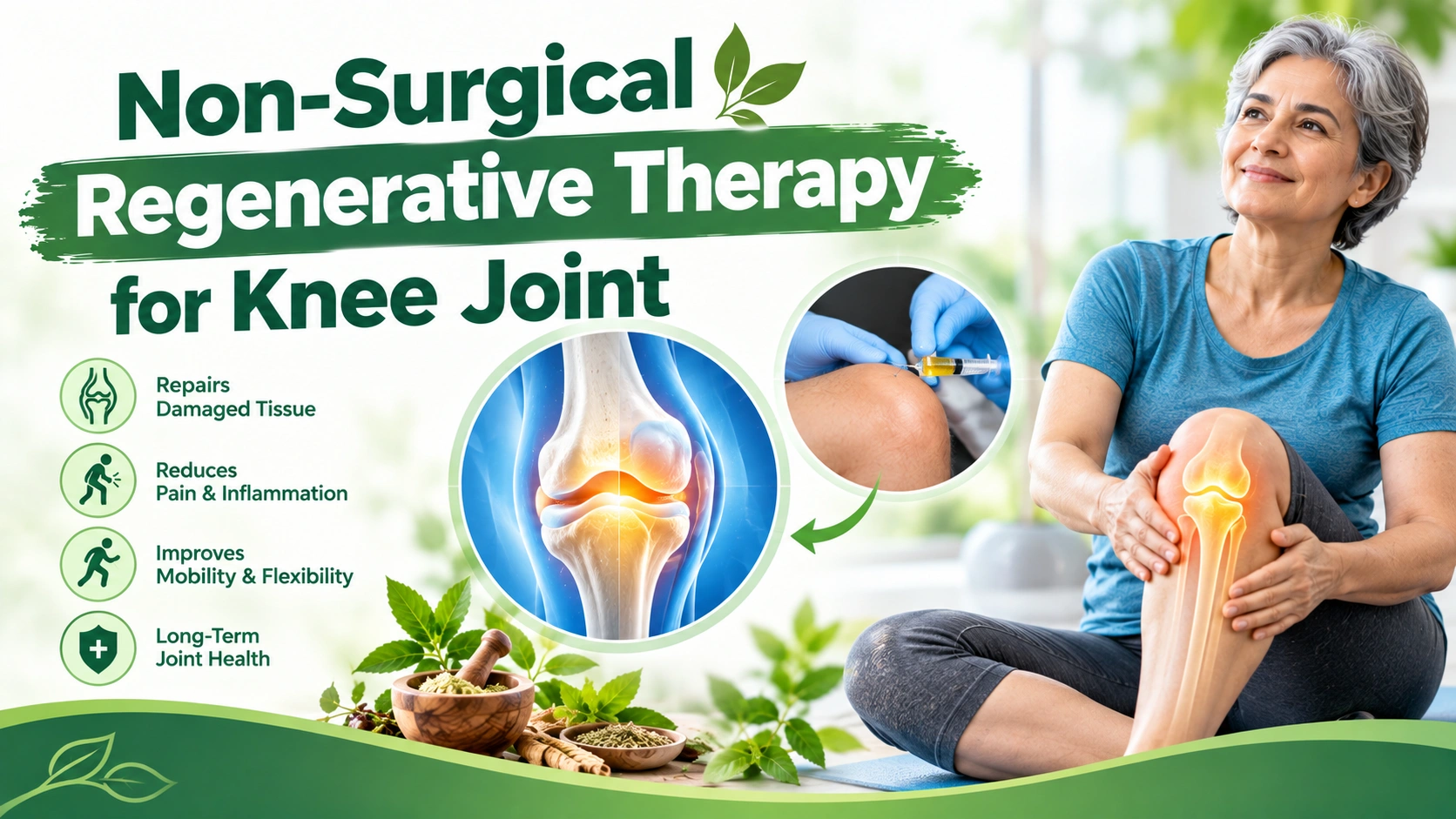
Ayurvedic Treatment for Knee Pain: It's Not Just Herbal Tea and Hoping for the Best
There's a bit of a stereotype that Ayurvedic treatment for knee pain means drinking some bitter kadha and waiting patiently. It's a lot more structured than that, actually. A typical treatment plan usually looks something like this:
- Agnikarma for direct, targeted pain relief at the source
- Panchakarma therapies, especially Janu Basti; warm medicated oil pooled and held over the knee using a dough ring, which sounds odd but feels genuinely relaxing
- Herbal formulations built around ingredients like Shallaki (Boswellia serrata), known for its anti-inflammatory action
- Some honest conversations about diet, because your knees are quietly keeping score of every extra plate of fried food
A study in the Journal of Ayurveda and Integrative Medicine actually tracked patients who received a combination of Agnikarma and Panchakarma, and found a noticeable drop in pain and stiffness scores within a few weeks. Not overnight magic, but a real, measurable improvement; which is more than a lot of people can say about their fifth round of painkillers.
Knee Cartilage Regeneration Ayurveda: Let's Be Honest About What's Possible
This is the question that gets asked the most, so let's not dance around it: can knee cartilage regeneration Ayurveda genuinely regrow cartilage that's already worn out? Here's the truthful answer; cartilage has almost no blood supply of its own, which makes it stubborn to heal, and even modern regenerative medicine hasn't fully cracked this one either.
What Ayurveda focuses on instead is slowing things down and improving the environment around the joint:
- Reducing the pace of further wear
- Improving joint lubrication, so movement feels smoother instead of that grinding sensation
- Strengthening the muscles around the knee so the joint itself carries less load
- Getting inflammation under control, which is often what's actually causing the pain flare-ups
A paper published in Ayu, a peer-reviewed Ayurveda journal, found that combining Ayurvedic protocols with physiotherapy helped slow cartilage degeneration and improved how well the joint functioned day to day. So no, it's not regrowing cartilage from scratch. But it's giving the knee a genuinely better shot at holding on to what it's got.
What Knee Joint Treatment in Ayurveda Actually Looks Like, Step by Step
If you're picturing a single dramatic session that fixes everything, that's not quite it. A typical knee joint treatment in Ayurveda plan unfolds over a few stages:
- First, the Vaidya figures out your Prakriti (body constitution) and which dosha imbalance is driving the pain
- Then come the Agnikarma sessions; quick, targeted, and honestly less uncomfortable than getting your eyebrows threaded
- Panchakarma therapies follow, working deeper into the tissue with warm oils
- Herbal medicines get added based on what your body actually needs, not a one-size-fits-all bottle
- And yes, diet changes show up somewhere in there too, usually involving fewer samosas than you'd like
Best Medicine for Knee Pain in Ayurveda: Is There Actually One Best Option?
Not really, and anyone who tells you there's a single miracle bottle is probably selling something. That said, a few formulations come up again and again when people talk about the best medicine for knee pain in Ayurveda:
- Mahanarayan Oil, mostly used for massage and external application
- Yograj Guggulu, a classic go-to for joint pain and stiffness
- Dashmoolarishta, which helps with inflammation and general mobility
- Simhanad Guggulu, often recommended specifically for osteoarthritis
None of these are meant to be picked off a shelf on your own. Ayurveda is personalized by nature; what works beautifully for your colleague's knee might do absolutely nothing for yours, and that's not you doing it wrong, that's just how this system works.
Agnikarma vs Painkillers: A Quick, Slightly Petty Comparison
| Factor | Agnikarma | Regular Painkillers |
| How long relief lasts | Builds up over sessions, tends to stick | Wears off right when you're mid-conversation |
| Side effects | Mild, if done by someone who knows what they're doing | Your stomach lining has some complaints |
| What it's actually doing | Working on the root cause | Basically hitting mute on the pain, not fixing it |
| Commitment needed | A handful of sessions, spread out | Every day, sometimes for years |
| First impression | Sounds scarier than it is | Sounds harmless, sneakily isn't always |
Key Takeaways
- Agnikarma for Chronic Knee Pain is a quick, controlled heat therapy; not the dramatic fire ritual the name suggests
- It works by boosting local circulation and calming down the inflammation causing the pain
- Knee cartilage regeneration Ayurveda is realistically about slowing damage, not fully regrowing cartilage
- A proper knee joint treatment in Ayurveda plan usually combines Agnikarma, Panchakarma, herbs, and diet changes
- Always go to a certified, experienced Ayurvedic practitioner; this isn't a DIY situation
FAQs
Does Agnikarma hurt?
Most people just feel a quick warm sensation, gone before you've even had time to brace for it.