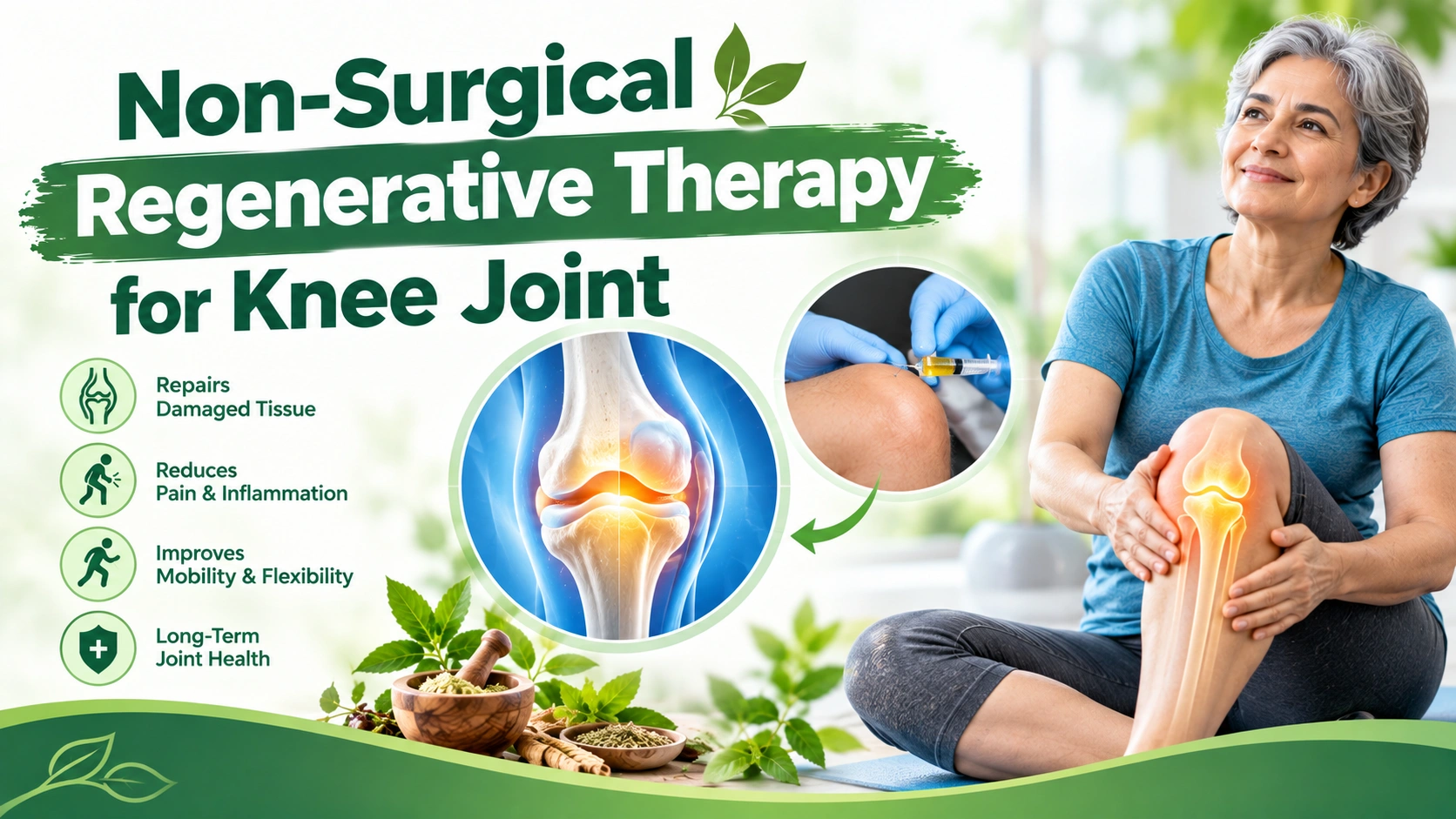
Imagine waking up, stepping out of bed, and hearing a sound resembling a handful of tortilla chips being violently crushed. If that’s your knee, you’re likely dealing with knee cartilage damage, and yes, Ayurveda actually has some incredibly time-tested ways to help you rebuild, soothe, and manage it without immediately rushing into surgery.
Now, let's address the elephant in the room: cartilage doesn't just magically grow back overnight like a lizard's tail. But before you resign yourself to a life of sitting on the sidelines and predicting the weather with your joints, let’s look at how ancient Indian medicine tackles this modern literal pain in the knee.
The Ayurvedic Perspective: What’s Blowing Out Your Knees?
In Western medicine, cartilage wear-and-tear is often labeled as osteoarthritis or mechanical degeneration. In Ayurveda, we call this a classic case of Sandhigata Vata.
Think of your body as an internal ecosystem. Vata dosha is the element of air and space; it’s responsible for movement, but when it goes rogue, it becomes dry, cold, and rough. When Vata accumulates in your joints, it dries up the Shleshaka Kapha (the body's natural, lubricating synovial fluid).
Without that cushion, your cartilage starts to grind. It’s exactly like driving a car with zero engine oil. It’s loud, it’s painful, and it’s definitely going to damage the machinery.
The Ultimate Knee Showdown: Ayurveda vs. Modern Medicine
Before we dive into the herbs, let's see how the ancient approach stacks up against conventional treatments.
| Feature | Conventional Medicine | Ayurvedic Therapy |
| Primary Goal | Mask the pain or replace the joint entirely. | Lubricate the joint and stop cartilage degeneration. |
| The Protocol | Cortisone shots, painkillers, and eventually, a shiny titanium knee. | Herbal oils, warm poultices, and dietary tweaks. |
| Side Effects | Liver stress from pills; clicking noises from your new bionic joint. | Smelling faintly like a delicious, warm cup of chai or a herb garden. |
| Long-term Outlook | Effective but invasive. | Slow, steady, and preserves your natural anatomy. |
Science Backs the Herbs: What Actually Works?
If you want to tackle joint pain relief and support cartilage repair, take the support of the following herbs:
1. Shallaki (Boswellia Serrata)
This is Ayurveda’s answer to ibuprofen, minus the stomach upset. Shallaki is packed with boswellic acids that fight off the inflammation eating away at your tissue.
What Science Says: A landmark study published in Phytomedicine (2003) by Kimmatkar et al. showed that patients with knee osteoarthritis who took Boswellia serrata reported a significant decrease in knee pain and swelling, alongside a massive improvement in knee flexion.
2. Ashwagandha
You probably know it as the herb that stops you from stressing out over work emails, but it’s also a potent anti-inflammatory. It helps inhibit the enzymes that break down cartilage matrix components.
3. Guggulu (Commiphora mukul)
This potent resin acts as a detoxifier and a powerful agent for natural knee healing. A study published in the Journal of Alternative and Complementary Medicine highlighted that Guggul formulations significantly reduced joint pain and improved physical function in people suffering from knee issues.
Ancient Tech: Therapies for Your Knees
If you visit an Ayurvedic doctor for degenerative joint disease, they won't just hand you a bottle of pills. They will likely recommend Janu Basti.
Imagine a tiny, leak-proof swimming pool made of black gram dough built right around your kneecap. The practitioner fills this pool with warm, medicated herbal oils like Mahanarayan Taila. Your knee just sits there, marinating in anti-inflammatory goodness for 30 to 45 minutes. It deeply penetrates the tissues, nourishes the remaining cartilage, and coaxes that missing lubrication back into the joint.
Key Takeaways
- Balance Vata: Focus on warm, cooked, moist foods to alleviate the counter-effects of Vata..
- Herbal Support: Herbs like Shallaki and Guggulu for joint inflammation treatment are a good bet.
- Lubrication is Key: External therapies like Janu Basti act like an oil change for your creaking joints.
- Be Patient: Natural cartilage regeneration support is a marathon, not a sprint. Give it a few months to show real results.
Frequently Asked Questions (FAQs)
Can Ayurvedic medicine completely regrow lost knee cartilage?
While it can’t entirely resurrect completely destroyed cartilage, it significantly halts degeneration, protects remaining tissue, and improves joint lubrication
.
How long does it take for Ayurveda to show results for knee pain?
You will likely feel a reduction in pain within 4 to 6 weeks, though structural joint support takes a few months of consistent care.
Is Shallaki safe to take every day for joint pain?
Yes, Shallaki is generally very safe for daily use and is much easier on your stomach lining than typical over-the-counter painkillers.
Can I combine Ayurvedic treatments with my current Western knee medications?
Absolutely, but you should always run it by both your doctor and an Ayurvedic practitioner to make sure your therapies complement each other perfectly.
Disclaimer
This blog is for informational and educational purposes only and does not substitute for professional medical advice, diagnosis, or treatment.