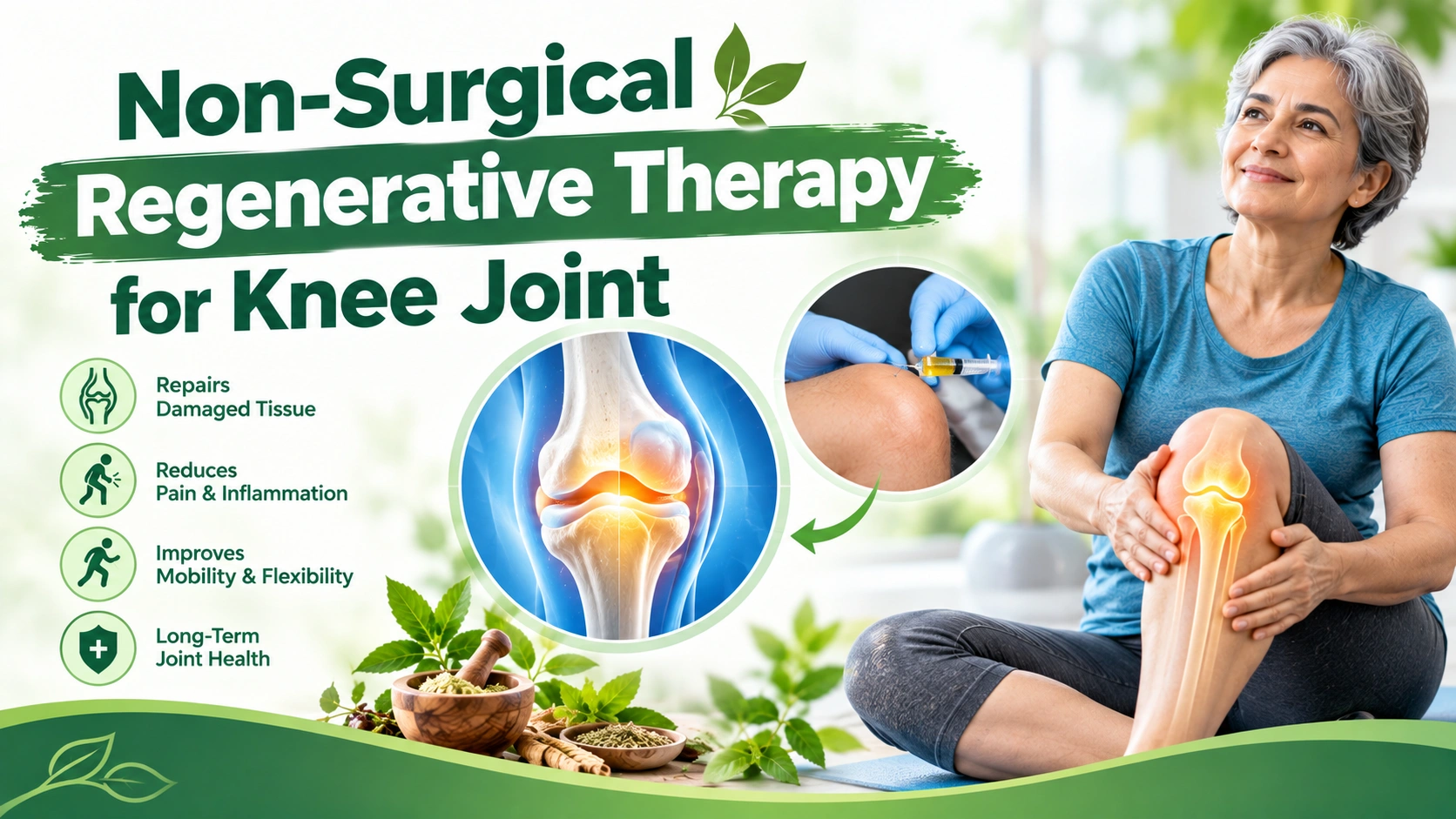
If your knees sound like a bag of potato chips every time you stand up, you are probably wondering if Ayurveda for knee pain actually works or not. The short answer: Yes, Ayurveda can absolutely help manage pain and improve mobility, but it is not a magic wand that instantly grows back lost cartilage overnight.
Think of it less like a quick-fix pill and more like a deep, holistic reset button for your joints. Let’s dive into how this ancient system tackles knee arthritis treatment, cartilage damage recovery, and why your knees are screaming at you in the first place.
Why Do Our Knees Turn Into Grumpy Old Men?
In modern medicine, we talk about wearing down the shock absorbers (cartilage) or dealing with inflammation. Ayurveda looks at the same problem but uses different vocabulary. It blames a malfunction in your Vata dosha; the biological energy linked to air, space, and movement.
When you age, eat too many dry foods, or overexert yourself, Vata goes rogue. It dries out the natural lubrication in your joints (what Ayurveda calls Shleshaka Kapha, and what your doctor calls synovial fluid). Once that fluid evaporates, you have bone grinding on bone. Yikes.
The Two Types of Knee Problems in Ayurveda
- Sandhigata Vata: This is pure wear-and-tear. Vata dries out the joint, leading to degenerative joint disease and cartilage erosion.
- Ama Vata: This happens when toxins (Ama) build up from poor digestion and settle into your joints, causing redness, swelling, and severe stiffness. This closely mirrors rheumatoid arthritis symptoms.
The Ayurvedic Toolkit for Knee Pain
Ayurveda doesn't just throw a random herb at your knee and hope for the best. It attacks the issue from multiple angles: soothing the rogue Vata, clearing out toxins, and manually lubricating the joint.
1. Herbal Heavyweights (Backed by Science)
You don't just have to take ancient texts at their word; modern science is finally catching up to what yogis knew thousands of years ago.
- Shallaki (Boswellia serrata): This is nature’s ibuprofen. A landmark study published in the Phytomedicine journal found that Boswellia serrata extract significantly reduced knee pain and increased knee flexion in patients with osteoarthritis.
- Ashwagandha: Known as an adaptogen, it reduces systemic inflammation and helps strengthen the muscles around the joint.
- Turmeric (Curcumin): A study in the Annals of Internal Medicine showed that curcumin extracts for arthritis were just as effective as NSAIDs (like diclofenac) for knee pain, but with way fewer complaints from your stomach.
2. Physical Therapies (The Spa Treatment Your Knees Deserve)
If you visit an Ayurvedic clinic, they won't just give you pills. They will likely suggest Janu Basti. Imagine a little dough dam built around your kneecap, which is then filled with warm, medicated herbal oil. It sounds wild, but it allows the oils to deeply penetrate the tissue, soothing the dry Vata energy and easing chronic knee stiffness.
Modern Medicine vs. Ayurveda: The Showdown
How do these two approaches stack up when your joints are staging a protest? Here is a quick look at the philosophy behind both styles of joint pain management.
| Feature | Modern Conventional Medicine | Ayurvedic Approach | The Verdict |
| Primary Goal | Kill the pain, suppress inflammation, or replace the joint. | Balance the doshas, digest toxins, lubricate the joint. | Both want you moving again, just different paths. |
| Speed | Fast. Pop a pill, feel better in an hour. | Slow and steady. It’s a marathon, not a sprint. | Fast is great for emergencies; slow is better for root causes. |
| Side Effects | Potential stomach ulcers or kidney stress from prolonged NSAID use. | Mostly just smelling like a walking spice rack. | Advantage: Ayurveda (if done right). |
| Cartilage Strategy | Injections or surgery if the damage is severe. | Slow down degeneration and preserve what's left. | Ayurveda protects the ecosystem; modern medicine replaces the hardware. |
Can Ayurveda Actually Repair Cartilage Damage?
Let’s keep it completely real: if your cartilage is completely gone and you are living a true "bone-on-bone" reality, Ayurvedic herbs cannot build a brand-new cushion out of thin air.
However, if you are dealing with early-to-moderate cartilage degeneration, Ayurvedic therapies can help slow down the destruction. By reducing inflammation and improving the quality of the synovial fluid, Ayurveda helps protect the remaining cartilage from further wear. Think of it as rust-proofing your joints.
Key Takeaways
- Ayurveda believes that knee pain occurs when dry and erratic increases of Vata dosha result in inadequate lubrication of the joints.
- Clinical studies prove the effectiveness of several herbs, including Shallaki (Boswellia) and Turmeric, as equal substitutes for the traditional analgesics that cause significant negative side effects.
- Only a proper combination of anti-inflammatory diets, special herb supplements and external oil therapies like Janu Basti can reduce pain effectively.
- Ayurveda does not change the pathologies involved in advanced structural bone issues (i.e., joints in a bone-on-bone position).
The Most Frequently Asked Questions (F.A.Q.)
Q: How soon can you expect Ayurveda to relieve your knee pain?
A: Most likely within a span of 2 - 4 weeks, though chronic situations might take longer to impact.
Q: Can you take Ayurvedic herbs together with your routine blood thinners or even arthritis treatment?
A: You should first consult your doctor because strong herbs, such as turmeric, may interfere with conventional medications.
Q: What is the best Ayurvedic diet for knee arthritis?
A: It is recommended to follow the diet made mostly up of warm, cooked, and easy-to-digest food with healthy fats included (like ghee).
Disclaimer: This article is for educational and entertainment purposes only and does not constitute medical advice. Always consult a qualified healthcare professional or an authorized Ayurvedic practitioner before starting any new herbal regimen or stopping your current medical treatments.