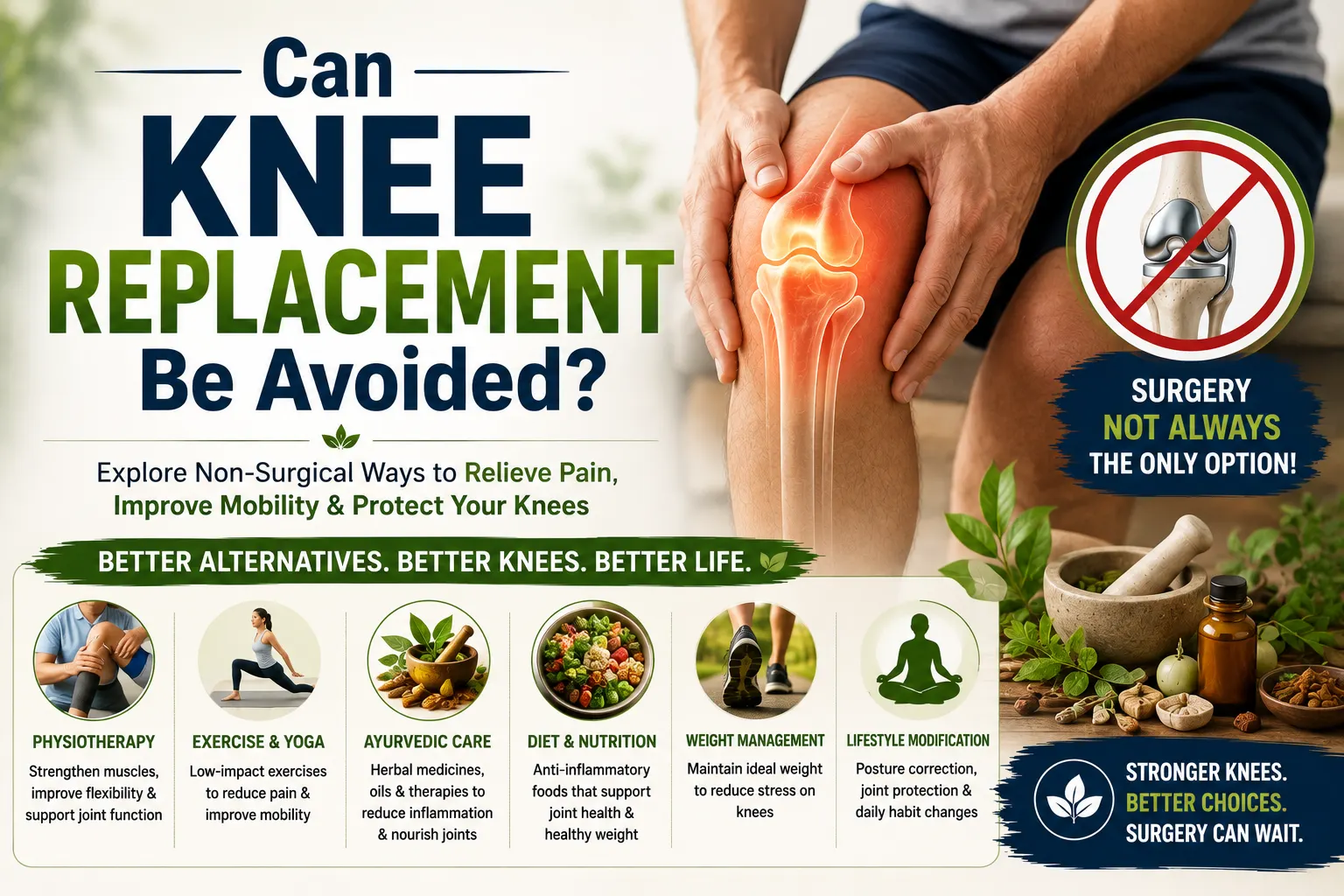
Yes, for a lot of people it can; at least for years, sometimes for good. Whether that's you depends on how bad your knee has actually gotten, and honestly, how much effort you're willing to put in before you and an orthopaedic surgeon start talking dates.
My uncle has been "thinking about" getting his knee replaced for about six years now. Every family dinner, same conversation: "Doctor says I should just get it done." Then he goes back to skipping his physio exercises and complaining about the stairs. I bring this up because he's actually a decent example of the messy middle ground most people live in; not desperate enough to book the surgery, not disciplined enough to do the things that might help him avoid it. If that sounds familiar, keep reading.
Knee replacement surgery (total knee arthroplasty, if you're trying to impress someone) tends to get talked about like it's either inevitable or something you're bravely putting off. It's neither, really. For a good chunk of people with knee pain, there's a genuine amount of room to work with before surgery becomes the obvious answer. Not everyone gets to skip it; we'll get to that too, but plenty of people are told "let's try a few things first" for good reason.
What's Actually Going Wrong in There?
Nine times out of ten, the culprit is knee osteoarthritis. Cartilage cushions your knee joint, and over the years, thanks to age, old injuries, extra body weight, or just genetics being unhelpful, that cushioning wears thin. Less padding means more bone grinding against bone, which is exactly as unpleasant as it sounds. Pain, stiffness, that awful crunching sound when you climb stairs; it's all downstream of the same basic problem.
Here's the thing though: doctors don't usually reach for surgery first. Most treatment guidelines want you to try the boring stuff before the dramatic stuff. And there's actual data behind that order of operations. Take the IDEA trial (Intensive Diet and Exercise for Arthritis), published in JAMA; researchers put overweight and obese adults with knee osteoarthritis through 18 months of either exercise, diet-based weight loss, or both together. The combo group didn't just feel better; their knee joint loads and inflammation markers actually improved more than either group doing just one thing. So if you're only going to do one of the two, do both instead. I know, annoying advice.
The Stuff That Actually Buys You Time (or More)
Dropping a Bit of Weight Helps More Than You'd Think
Every kilogram you're carrying puts several times that in extra force through your knee with each step; the math is not in your favor when you're overweight. But the flip side is good news: even modest weight loss tends to bring outsized relief. In the IDEA trial, participants who combined weight loss with exercise saw their knees genuinely handling less stress, not just feeling less painful. Weight management for knee pain isn't wellness-blog fluff; it's one of the better-supported interventions out there.
Exercise, Which Sounds Like a Terrible Idea and Isn't
I get the hesitation. Your knee already hurts, and someone's telling you to move it more. Feels backwards. But physical therapy for knee osteoarthritis and structured exercise are recommended as first-line treatment across pretty much every major set of clinical guidelines. A large review covering over 200 studies (reported by ScienceDaily in 2026) found aerobic activities like walking and cycling gave some of the best pain relief and mobility gains for knee osteoarthritis, ahead of a lot of passive treatments. Not every study agrees on exactly how much it helps; some show smaller effects than others; but almost none of them say "just sit still" is the better move.
There's also the MEDIC trial out of Denmark, which put patients through a structured non-surgical program: exercise, education, a small amount of weight loss. Result: 67% of participants improved enough that they didn't need surgery for at least two years afterward. That's a real number, not a maybe.
Actually Showing Up to Physical Therapy
Physio doesn't have the appeal of an operating room and a "before and after" story. It's slow, it's repetitive, some days it barely feels like progress. But research tied to the QUADX-1 trial found that as many as a quarter of patients may be getting knee replacements before properly trying the exercise-and-weight-loss route their guidelines actually recommend first. A quarter is a lot of people potentially going under the knife earlier than they needed to.
Braces, Injections, and Other Things Worth Trying
A large analysis of close to 10,000 patients found knee braces, hydrotherapy, and exercise ranked among the most effective non-drug treatments for knee osteoarthritis, often doing better than common pain medications. Steroid or hyaluronic acid injections can also help, buying time and cutting inflammation for a while; though results differ a lot person to person, and they're more of a pause button than a permanent fix.
If Early Treatment Works, Don't Stop
A Swedish registry study that tracked over 44,000 patients found something worth remembering: people who responded well to first-line treatment (exercise plus education) within the first three months were significantly less likely to need joint replacement within the next five years, compared to people who didn't respond. So if the unglamorous stuff is working even a little, that's not a reason to quit; it's the reason to keep going.
When It's Not Enough, and That's Okay?
None of this means surgery is something to avoid at all costs. For advanced knee osteoarthritis; real bone-on-bone contact, visible deformity, pain that's wrecking your sleep- conservative treatment runs out of road pretty fast. Research summarised on NCBI Bookshelf compared knee replacement plus conservative care against conservative care alone, and found 85% of people who had surgery saw noticeable improvement, versus 67% managing on conservative treatment alone. That's not conservative treatment failing; it's just surgery being the better tool once things reach that point. And for what it's worth, more than 90% of knee replacements are still functioning well a decade later, which is a pretty solid track record for something involving metal and plastic in your leg.
Quick Comparison: Trying to Avoid Surgery vs. Just Getting It Done
| Factor | Non-Surgical Route (Exercise, Weight Loss, PT) | Knee Replacement Surgery |
| Effort required | You do the work, week after week, no shortcuts | You show up once, the surgeon does the heavy lifting |
| Recovery | Gradual, ongoing, no crutches | Weeks to months, crutches are non-negotiable |
| Best suited for | Mild to moderate osteoarthritis, catchable early | Advanced, bone-on-bone, "the stairs have won" territory |
| Risk | Low; mostly sore muscles and wounded pride | Moderate, it's real surgery with real risks |
| Cost | Cheaper, but spread out over time | Pricier upfront, often one-and-done |
| Success rate | Roughly 67% see real improvement | Roughly 85% improve, 90%+ implants still going at 10 years |
(These numbers come straight from the studies above; your knee, being a knee and not a spreadsheet, may not read the memo exactly.)
Key Takeaways
- Knee replacement can genuinely be delayed or avoided for mild-to-moderate knee osteoarthritis through weight loss, exercise, and physical therapy.
- The IDEA trial showed diet-induced weight loss combined with exercise beats either one alone.
- Physical therapy for knee osteoarthritis and aerobic exercise are backed by strong evidence as a first-line approach, not a last resort.
- A meaningful share of patients may be getting surgery before properly trying the recommended non-surgical treatment first.
- Responding well early to treatment is linked to a lower chance of needing surgery within five years.
- For advanced osteoarthritis, surgery remains genuinely effective, with strong long-term outcomes.
- This is ultimately a conversation to have with your orthopaedic doctor, not something to decide off a blog post; even a well-researched one.
FAQs
Can knee replacement surgery be avoided completely?
For a lot of people with mild-to-moderate knee osteoarthritis, yes, weight loss and exercise can delay or even prevent it, though it really depends on how far the joint damage has already gone.
Does losing weight actually make that much difference to knee pain?
Surprisingly, yes; even a modest amount of weight loss takes real pressure off the joint and has been shown in clinical trials to reduce pain and improve movement.
Is it safe to exercise when my knee already hurts?
In most cases, yes; low-impact movement like walking, cycling, or swimming is recommended by nearly every orthopaedic guideline and tends to help far more than it hurts.
How do I know if I actually need surgery instead of trying conservative treatment?
If you've genuinely stuck with exercise, weight loss, and physical therapy and the pain still isn't budging, that's the point to sit down with an orthopaedic specialist and talk options.
How long can you realistically put off a knee replacement?
There's no set number; some people manage for years or indefinitely with the right non-surgical approach, while others with more advanced damage may need surgery sooner. It really comes down to the individual knee.
Disclaimer: This blog is written for general information only and isn't medical advice, diagnosis, or a treatment plan. Every knee and every case of osteoarthritis is different, so talk to an orthopaedic doctor or physiotherapist before making any decisions about your own treatment.