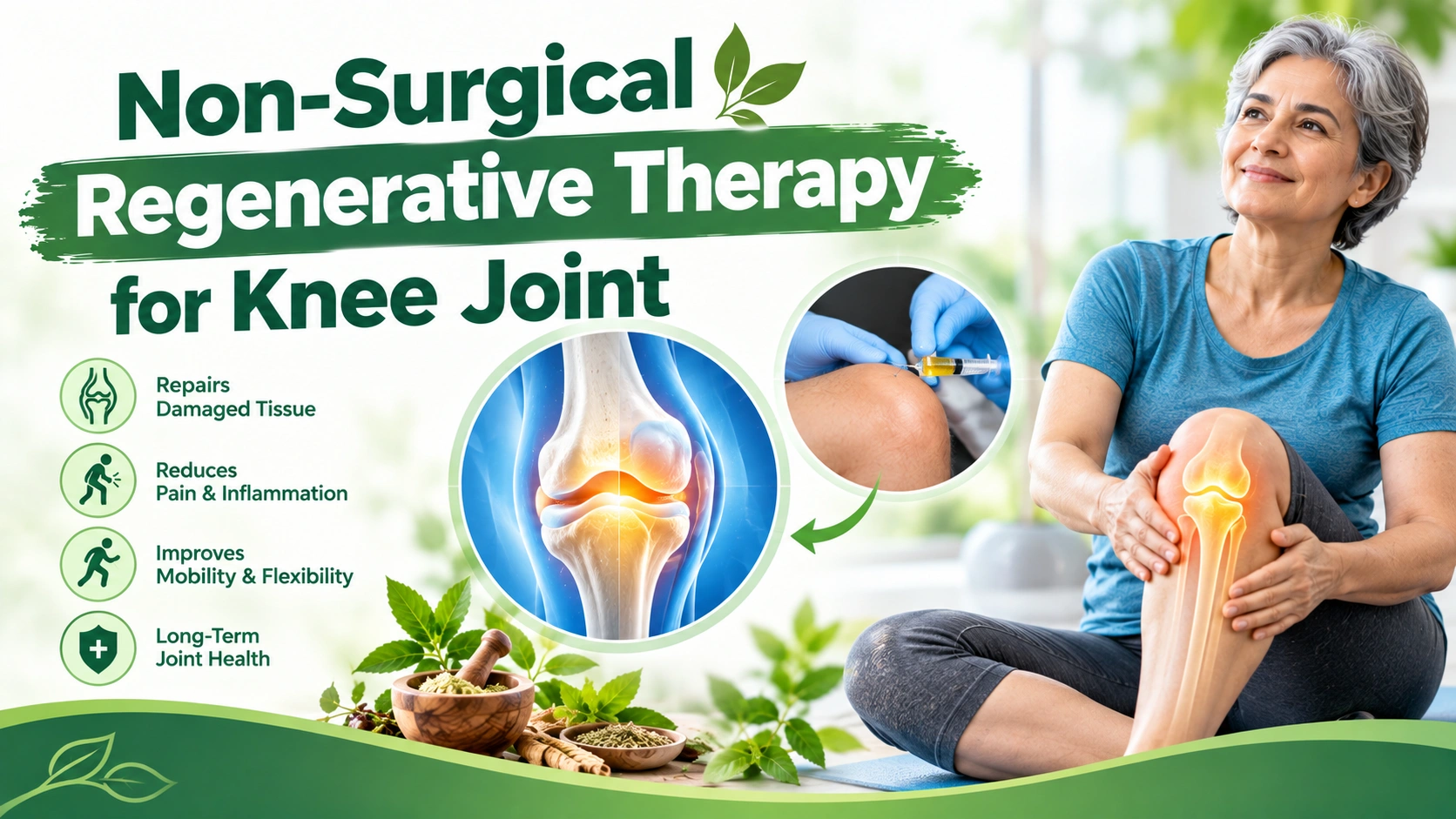
Short answer: yes, quite a few Ayurvedic formulations for knee stiffness; Shallaki (Boswellia), guggul, turmeric; actually, hold up under proper clinical study, not just in your neighbourhood aunty's home remedy book. They're just slow. Painfully slow, if we're honest, which is ironic given the whole point is pain relief.
So if you clicked on this hoping for a one-week fix, I won't lie to you and say it exists. It doesn't. But if you're willing to give something four to eight weeks, there's real research behind it, and I dug through a decent chunk of it so you don't have to sit there squinting at PubMed at 1 am like I did.
Why Your Knee Sounds Like a Door Hinge Now
Nobody thinks about their knees until one random Tuesday when getting up from the floor requires a small strategic plan. You brace one hand on the sofa, exhale like you're deadlifting, and somewhere in the process your knee makes a sound that honestly shouldn't come from a human body.
Ayurveda has an old-school explanation for this: an aggravated Vata dosha settling into the joint space, drying out the natural lubrication that's supposed to keep things gliding smoothly. Modern medicine calls something similar osteoarthritis; Ayurveda calls it Sandhivata. Different vocabulary, same annoying result: stiffness, that creaky sound, and knees that feel thirty years older than the rest of you.
Add a desk job, zero stretching, some extra weight around the middle, and sluggish digestion (what Ayurveda calls Ama, basically undigested gunk clogging things up), and your knees are basically staging a quiet protest.
The Herbs Everyone Keeps Talking About
If you've spent five minutes looking into this, you've already run into these names on repeat:
- Shallaki (Boswellia serrata); probably the most-studied one on this list, works by calming down certain inflammation-triggering enzymes in the joint.
- Guggul (Commiphora mukul); a resin, used for centuries for exactly this kind of Vata-driven joint stiffness.
- Haridra (Turmeric); yes, the same jar sitting in your kitchen. Its active compound, curcumin, has an unreasonably large research paper trail for a spice.
- Rasna, Nirgundi, Ashwagandha; the supporting cast, usually stacked into combination formulas rather than taken alone.
- Medicated oils like Mahanarayan Taila, used for massage and warm compresses rather than swallowed.
Most Ayurvedic practitioners don't hand you one herb in isolation; they reach for combination tablets like Simhanad Guggulu, Yograj Guggulu, or Laksha Guggulu, which stack several of these together. Think of it less like a single medicine and more like a small committee working on your knee.
What Do the Actual Studies Say
Here's where I'll drop the receipts, because "trust me" isn't really a science.
There's a double-blind, placebo-controlled trial on a standardized Boswellia extract that ran for a fairly long 120 days on knee osteoarthritis patients. The group taking Boswellia showed better pain and stiffness scores than placebo, lower inflammatory markers in their blood, and even some improvement visible on X-rays of the joint space. A separate, larger trial tested two different Boswellia doses over 90 days on 105 people and found improvements in mobility; some participants apparently noticed a difference within the first five days, which is unusually fast for a herb.
Turmeric's active compound, curcumin, has its own solid case. An eight-week randomized trial on 101 adults with knee osteoarthritis compared a standardized curcumin extract against a placebo, and the curcumin group reported lower pain scores meaningfully and did better on walking tests. More than a third of them managed to cut down on their usual pain medication, versus roughly one in eight in the placebo group.
On the classical Ayurveda side, there's a fairly large, government-backed multicentre trial in India (run under something called the NMITLI programme, across respected hospitals including KEM in Mumbai and NIMS in Hyderabad) that compared standardized Ayurvedic formulations against both a placebo and glucosamine over 16 weeks. And a smaller outcomes study on guggul specifically found improvements in stiffness and pain scores in older adults with knee osteoarthritis after regular use.
None of this makes these herbs a miracle cure. But it does mean your grandmother wasn't just making things up when she told you to rub oil on your knee and stop skipping her turmeric milk.
Ayurveda vs Painkillers: A Not-Very-Scientific Comparison
| Ayurvedic Formulation | Regular Painkillers (NSAIDs) | |
| Speed | Slow, builds up over weeks | Fast, works in an hour or two |
| Long game | Tends to help the underlying stiffness | Mostly hides the pain, doesn't fix much |
| Side effects | Usually mild, maybe a bit of stomach upset with guggul | Can mess with your stomach and kidneys over time |
| Cost | Cheaper across months of use | Adds up faster than you'd think |
| What your mom says | "See, I told you" | "Again with the tablets?" |
Not really an either-or thing. A lot of people, and quite a few doctors, are fine with using both together, just not without checking in with someone qualified first.
What an Actual Routine Might Look Like?
If you're actually going to try this instead of just reading about it, here's roughly what it tends to involve in practice:
- Internal formulations like Simhanad Guggulu or a standardized Boswellia extract, usually twice a day after meals, ideally under someone's guidance rather than guessed at.
- Warm oil massage; Mahanarayan or plain sesame oil; followed by a hot compress. This one genuinely helps with that stiff, locked-up feeling first thing in the morning.
- Some actual movement. Gentle knee-strengthening moves, a bit of yoga, maybe just walking more. No herb is beating basic movement, sorry.
- A diet shift away from cold, dry, over-processed food toward warmer, well-cooked, lightly oiled meals.
- Losing a bit of extra weight if that's relevant, since every kilo is extra load your knee has to carry around all day.
The thing that actually makes a difference here is sticking with it, not intensity. Nobody's knee got better because they took one dramatic dose of guggul on a bad day and gave up a week later.
One Honest Caveat
These formulations look genuinely promising on paper, but they're not meant to replace an actual diagnosis. If your knee suddenly swelled up, turned red, came with fever, or followed some kind of injury, please don't just start popping herbal tablets and hoping. See a doctor first. Deal with the herbs after.
Key Takeaways
- Boswellia serrata (Shallaki) has decent clinical backing for cutting down knee pain, stiffness, and inflammation.
- Curcumin/turmeric extracts show real, measurable improvement in pain and mobility in randomized trials.
- Combination formulas like Simhanad Guggulu and Laksha Guggulu have been tested in larger, government-run trials in India.
- Expect results in weeks, not days; this isn't a same-day fix.
- Pairing internal formulations with oil massage, movement, and diet changes works better than any one piece alone.
- Talk to a qualified doctor or Ayurvedic practitioner before starting, especially if symptoms came on suddenly or severely.
FAQs
Does Ayurvedic medicine actually help with knee stiffness?
Yes; herbs like Boswellia and turmeric have real clinical evidence behind them, though the relief builds up gradually rather than hitting you overnight.
How long before Ayurvedic formulations show any results for knee pain?
Most people start noticing something somewhere around four to twelve weeks in, not the next morning.
Can Ayurvedic knee formulas be taken alongside regular painkillers?
Often yes, plenty of people do both, but it's worth running it by your doctor first just to be safe.
Is oil massage for knee stiffness actually doing anything, or just nice to have?
It genuinely helps loosen up a stiff joint and gets circulation moving, so it's more than just a relaxing ritual.
Do herbs like guggul or Boswellia have side effects?
Mostly they're well tolerated, though a few people get mild stomach discomfort, so it's smart to start on a lower dose and see how your body reacts.
Disclaimer: This article is meant for general information, not medical advice. It isn't a substitute for a proper diagnosis or treatment from a qualified professional. Ayurvedic formulations can interact with existing medications or conditions, so please talk to a doctor or registered Ayurvedic practitioner before starting anything new, especially if your knee pain is sudden or severe.