Ayurveda treats knee pain as a Vata dosha going out of balance and settling in the joint, so instead of just numbing the pain, it works on oiling, strengthening, and calming the joint from the inside out. That's really the short version. Everything else in this piece is just me unpacking what that actually means in practice, because "balance your Vata" is a nice sentence, but it doesn't tell you much when your knee is screaming at 11pm.
I'll be honest, I didn't think much about knees until mine started making sounds that could double as sound effects in a horror movie. One day you're fine, the next you're doing the slow, dramatic "old man getting up from a chair" routine at 28. If that sounds familiar, you're not alone, and you're definitely not too young for it. Knee pain doesn't check your ID before showing up.
Modern medicine's answer is usually pretty simple: take this pill, ice it, maybe physio if things get serious. Ayurveda, on the other hand, has been fussing over creaky joints for thousands of years and has a lot more to say about it. So let's actually get into what Ayurvedic treatment for knee pain looks like, without dressing it up in more mystery than it needs.
The Whole "Vata" Thing, Explained Without the Jargon
Ayurveda splits the body's functioning into three doshas: Vata, Pitta, and Kapha. Think of them less like magic energies and more like three different operating styles your body runs on. Vata governs movement, and joints (being all about movement, space, and dryness) are basically Vata's home address. When Vata gets aggravated; from cold weather, irregular routines, too much dry or raw food, ageing, or honestly just not moving enough; it dries things out. Less lubrication in the joint means more friction, more stiffness, more of that grinding feeling that makes you wince mid-squat.
Classical Ayurvedic texts call this condition Sandhivata, and if you squint at it, it lines up fairly closely with what modern medicine calls osteoarthritis. Not identical, but close enough that researchers have actually bothered testing whether the old remedies hold up under a microscope. And a fair number of them do, which is more than I can say for half the "life hacks" floating around the internet.
What Ayurvedic Knee Pain Treatment Actually Involves
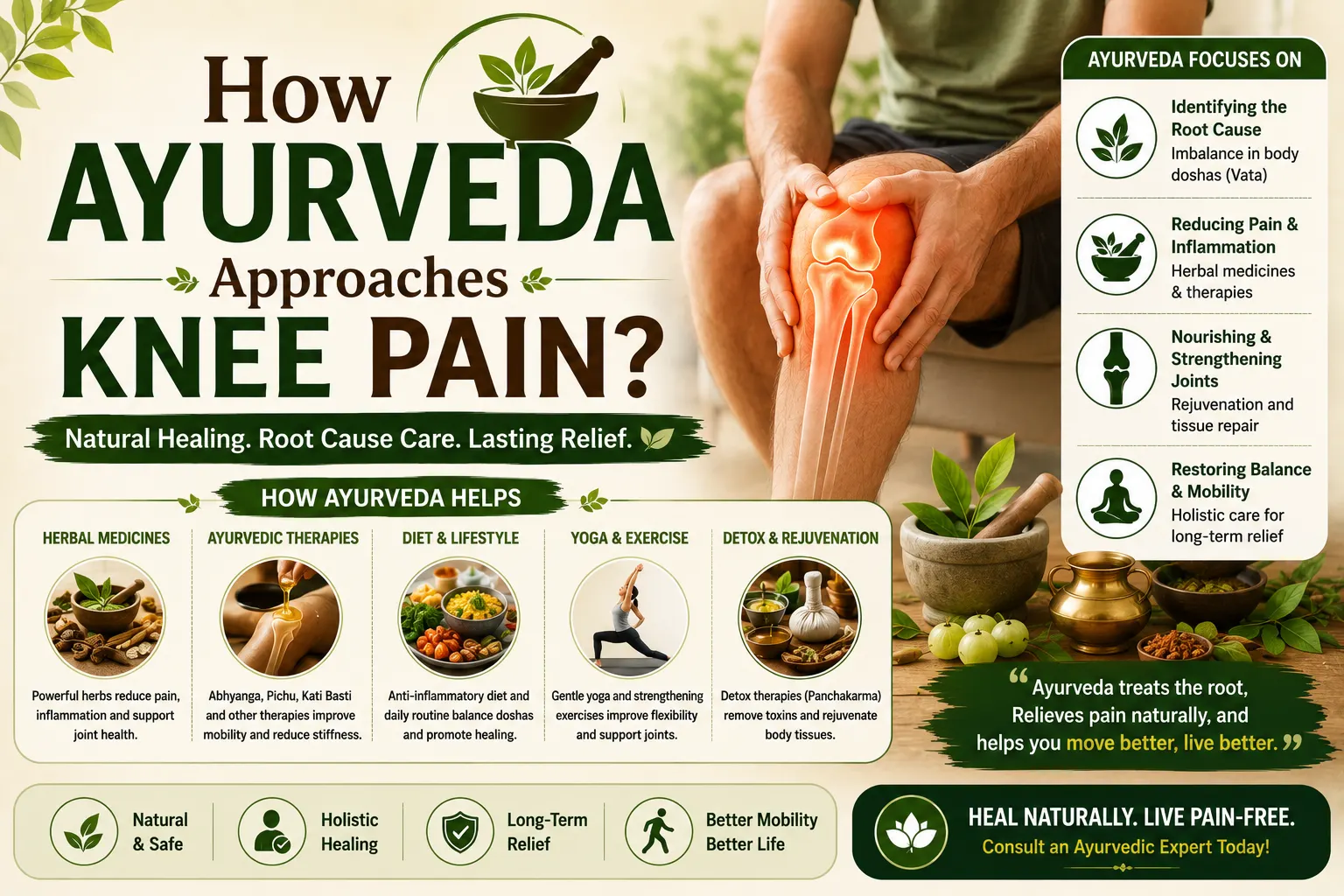
There's no single pill here, which honestly might annoy people who just want a quick fix. Ayurveda tends to work on several fronts at once:
- Oil massage (Abhyanga): warm oils like Mahanarayan or sesame oil, massaged into the knee to loosen it up and improve blood flow.
- Herbs: Shallaki (Boswellia serrata), Guggulu, and Ashwagandha show up again and again in classical formulas, mostly for their anti-inflammatory action.
- Janu Basti: a small dough wall is built around the knee and warm medicated oil is pooled inside it. It sounds odd on paper but it's genuinely one of the more relaxing things you can do to a sore joint.
- Diet tweaks: warm, cooked, slightly oily food over cold and raw stuff, because dry food is thought to feed the Vata problem.
- Movement: gentle yoga and stretching rather than skipping exercise altogether, which a lot of people with knee pain instinctively do (and it usually makes things worse, not better).
This is why people who go looking for knee pain Ayurvedic treatment often end up describing it less as "a treatment" and more as "a whole new way of living that happened to fix my knee."
Okay, But Does Any of This Actually Work?
Fair question, and I had it too before digging into this. Turns out there's more research than you'd expect.
A trial published in Complementary Therapies in Medicine pitted a full Ayurvedic protocol (Ashwagandha, Yogaraja Guggulu, oil massage, diet advice, the whole package) against standard conservative care for knee osteoarthritis, and the Ayurveda group came out ahead on both pain and function scores.
Boswellia serrata gets the most attention out of all the herbs, and for good reason. An older but well-cited double-blind, placebo-controlled crossover study out of a medical college in Nagpur found patients on Boswellia extract reported less pain, less swelling, and better knee flexion than those on placebo.
Then there's a much bigger multicentre trial: over 400 patients, that compared standardized Ayurvedic formulations against glucosamine and the common NSAID celecoxib, and the Ayurvedic group held its own across 24 weeks, without the usual stomach and kidney concerns that come with long-term NSAID use.
More recently, researchers went as far as using MRI scans to actually watch cartilage over six months in people taking a Boswellia extract, and found improvement not just in how patients felt, but in the joint tissue itself. So no, this isn't just "my grandmother swears by it" territory anymore, though grandmothers were clearly onto something the whole time.
Ayurveda vs. Painkillers: A Quick, Honest Table
| Factor | Ayurvedic Approach | Regular Painkillers (NSAIDs) |
| Speed | Slow, like it's in no rush | Fast, like it's late for something |
| Long-term joint health | Tries to actually repair | Mostly just turns off the alarm |
| Side effects | Usually mild, more about discipline | Can hit the stomach, kidneys, heart |
| Effort involved | Fairly high; oils, diet, routine | Low; swallow and move on |
| Best suited for | Chronic, slow-building pain | Sudden flare-ups |
If your knee pain has been a long, drawn-out situation, Ayurveda is playing the long game. If you just twisted it running for a bus, a painkiller will probably do the job faster.
Small Habits Ayurveda Swears By for Knee Health
- Self-massage with warm sesame oil before a bath, especially once winter rolls in
- Cutting back on cold drinks and too many raw salads if you're already prone to stiffness
- Choosing gentle, knee-friendly yoga poses over high-impact squats and jumping workouts
- Keeping your weight in check, since every extra kilo is extra load on the joint
- Not sitting directly under an AC vent for hours, no matter how tempting it is in summer
Key Takeaways
- Ayurveda sees knee pain mostly as a Vata dosha imbalance, often labeled Sandhivata.
- Ayurvedic treatment for knee issues leans on oil therapy, herbs, diet changes, and movement together, not one single fix.
- Herbs like Boswellia serrata and Ashwagandha actually have clinical trial backing for their anti-inflammatory effects.
- Ayurvedic knee pain treatment works gradually, focusing on repairing the joint rather than just muting the pain signal.
- It works well alongside conventional medical care, especially for anything sudden or severe.
Wrapping This Up
Your knees carry you through pretty much everything; every flight of stairs, every awkward squat at the gym, every time you crouch down to pick something up and immediately regret it. Treating them like they only matter once they hurt is a bit backwards. Knee pain Ayurvedic treatment isn't a fast fix, and honestly, it's not trying to be. It's slower, a bit more involved, and it asks a little patience from you. But for a lot of people dealing with ongoing stiffness and ache, that trade-off is worth it. Whether you go all in with the oils and herbs, or just steal a couple of habits like warmer meals and gentler stretching, your knees will probably be grateful. Quietly. Because if there's one thing they've never been good at, it's saying thank you out loud.
FAQs
Does Ayurveda cure knee osteoarthritis completely?
Not really a full cure, but it can noticeably reduce pain and stiffness and slow further wear if you stick with it.
How long before Ayurvedic knee pain treatment shows results?
Most people start noticing a difference somewhere between 6 and 12 weeks, since it's built around gradual healing, not instant relief.
Is Boswellia serrata safe to take for a long time?
Studies suggest it's generally well tolerated, though it's still worth checking in with a practitioner before making it a long-term habit.
Can I take Ayurvedic treatment alongside regular painkillers?
Most people do combine the two, but it's worth mentioning to your doctor first just to rule out any interactions.
Is Janu Basti uncomfortable to sit through?
Not at all; it's basically a warm oil pool sitting on your knee, and most people find it more relaxing than the actual treatment it's meant to be.
Disclaimer: This article is meant for general information only and isn't a substitute for professional medical advice, diagnosis, or treatment. Knee pain can come from many different causes, so please talk to a qualified doctor or Ayurvedic practitioner before starting any new treatment.