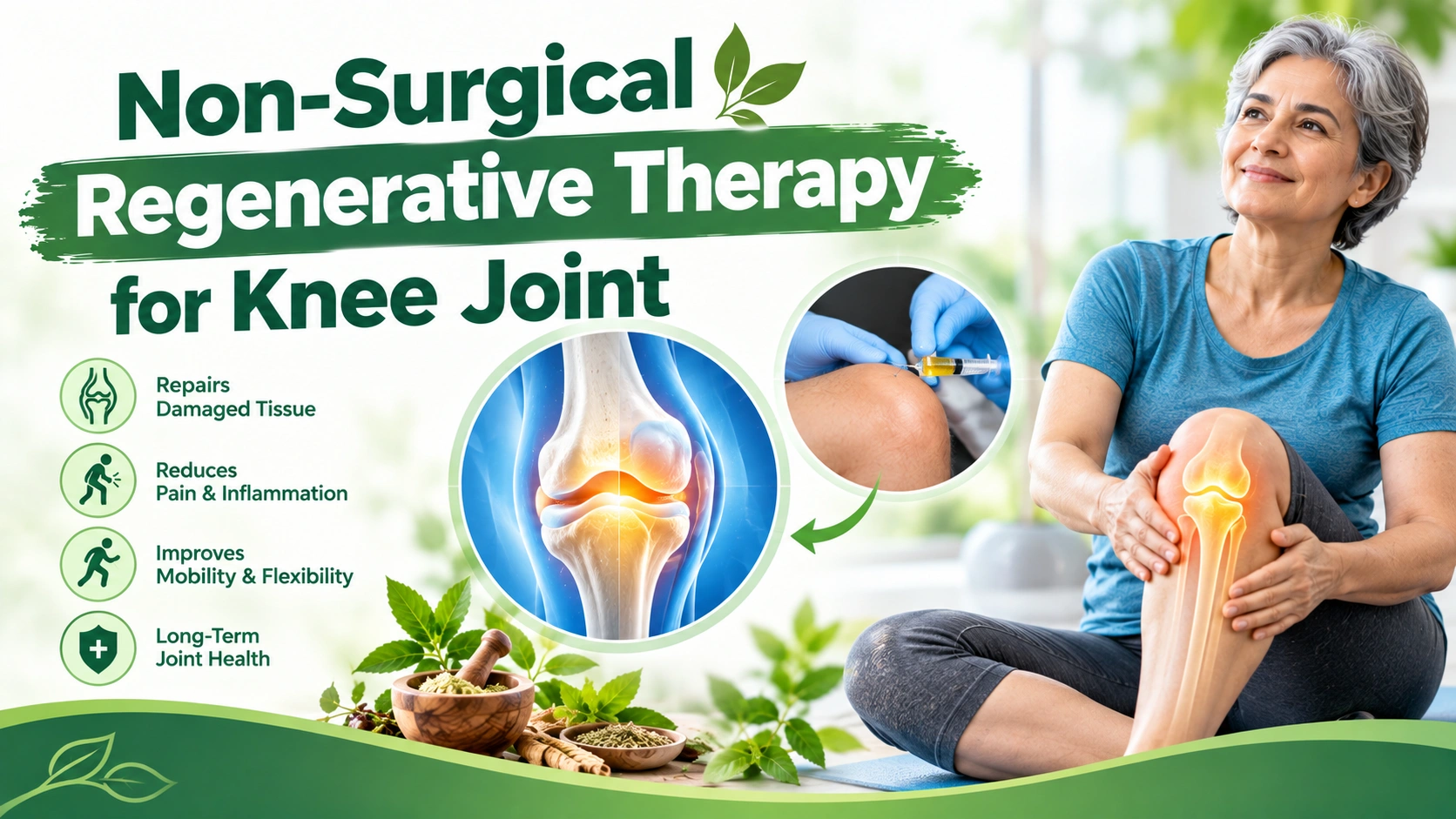
Short answer: Ayurvedic treatment for knee pain works by calming inflammation, oiling up stiff joints (literally), and fixing the root cause instead of just numbing the ache. It's less "pop a pill and pray" and more "let's figure out why your knee is throwing a tantrum in the first place."
Now, if you've ever tried to get up from a cross-legged position on the floor and sounded like a rusty gate doing it, congratulations, you already know knee pain isn't just an "old people problem." It's an everyone problem. Desk jobs, missed workouts, that one badminton match where you thought you were still 25; knees remember everything.
What Ayurveda Actually Says About Your Cranky Knees?
In Ayurveda, knee pain usually falls under a condition called Sandhivata (basically, aggravated Vata dosha settling into the joints).
Instead of just chasing the pain away, Ayurvedic knee pain treatment focuses on:
- Balancing Vata dosha
- Reducing inflammation
- Improving joint lubrication
- Strengthening surrounding muscles
The Star Herbs (No, Not Just Turmeric)
Everyone knows turmeric by now; it's basically the celebrity of Ayurvedic herbs. But there's a whole supporting cast doing quiet, unglamorous work backstage:
- Boswellia serrata (Shallaki) – Studied for its anti-inflammatory action on joints. A clinical trial published in the journal Phytomedicine found that Boswellia extract helped reduce knee pain and improve joint function in people with osteoarthritis within just a few weeks.
- Guggulu – Traditionally used to reduce swelling and support joint mobility.
- Ashwagandha – Helps with strength and recovery, and doubles up as a stress-buster (because stress makes everything hurt more, knees included).
- Rasna and Nirgundi – Common in oils and pastes used for local pain relief.
A review published in the Journal of Ayurveda and Integrative Medicine also noted that combination herbal formulations used in classical Ayurvedic knee pain management showed measurable improvement in pain and stiffness scores compared to placebo groups. So no, it's not just grandma's folklore; there's real research quietly backing it up.
Panchakarma: The Ayurvedic "Reset Button"
If Ayurveda had a mic-drop moment, it would be Panchakarma therapy. Treatments like Janu Basti (warm medicated oil pooled over the knee) and Abhyanga (therapeutic oil massage) are basically spa day meets serious joint therapy. The oil seeps in, improves circulation, and helps loosen up all that stiffness that's been camping out in your joint for months.
A small clinical study in the Ayu journal observed that patients undergoing Panchakarma-based knee treatments reported noticeably better mobility and reduced pain scores after a few weeks of therapy; proof that "just relax and get an oil massage" is sometimes legitimate medical advice.
Diet and Lifestyle (Because Your Knee Reads Your Grocery List)
Ayurveda also nudges you to:
- Avoid excess cold, dry, and processed foods (Vata's favourite troublemakers)
- Include warm, nourishing meals with healthy fats like ghee
- Stay active with gentle movement; yoga, walking, swimming
- Maintain a healthy weight, because every extra kilo is extra pressure on those poor knees
Ayurveda vs Modern Painkillers: A Quick (Funny) Comparison
| Category | Ayurvedic Approach | Modern Painkillers |
| Speed | Slow and steady, like a tortoise with a PhD | Fast, like a caffeine shot |
| Root cause | Actually tries to fix it | Mostly just mutes the alarm |
| Side effects | Minimal, if done right | Can upset your stomach (literally) |
| Vibe | Warm oils, herbs, patience | Pop a tablet and hope for the best |
| Long-term commitment | Requires consistency | Requires… nothing, which is the problem |
Key Takeaways
- Ayurvedic treatment for knee pain targets the root cause, not just the symptom
- Herbs like Boswellia serrata, Guggulu, and Ashwagandha have documented anti-inflammatory benefits
- Panchakarma therapies like Janu Basti and Abhyanga improve circulation and joint mobility
- Diet and lifestyle changes play a huge supporting role
- Results take time, but tend to be gentler on the body long-term
FAQs
Can I combine Ayurvedic treatment with regular painkillers?
It's best to check with your doctor first, since combining treatments should always be supervised.
Is Ayurvedic treatment only for old age knee pain?
Not at all; it's just as useful for younger folks dealing with joint stiffness from desk jobs or sports injuries.
Disclaimer: This blog is for general informational purposes only and isn't a substitute for professional medical advice, diagnosis, or treatment. Knee pain can have many causes, so please consult a qualified doctor or certified Ayurvedic practitioner before starting any new treatment or therapy.