Does It Actually Work?
Short answer: yes. Ayurvedic treatment for knee pain in Greater Noida works because it goes after the actual reason your knee is throwing a tantrum; through herbs, oil therapies, and a few lifestyle habits you probably need to fix anyway; instead of just muting the pain signal for a few hours like a painkiller does.
Most of us go through the same three stages. Stage one: ignore it. Stage two: take a painkiller and pretend it's fine. Stage three: 1 AM, phone in hand, typing "knee pain treatment ayurveda" into Google because the painkiller stopped working and you're tired of feeling like your knees are forty years older than the rest of you. If that's you right now, honestly, welcome. You're in the right place, and no, this isn't going to be some vague "just drink turmeric water and hope" advice. There's real substance here.
Okay, But Why Does the Knee Hurt This Much in the First Place?
Here's the thing nobody explains properly. In Ayurveda, most knee pain, especially the osteoarthritis kind, comes down to something called an aggravated Vata dosha. In plain English, Vata going out of balance basically dries up the natural oil (synovial fluid) that's supposed to keep your knee joint gliding smoothly. Less oil, more friction, and suddenly your knee sounds like a rusty gate every time you get up from a chair.
A few things that tend to push Vata out of whack and set this whole thing off:
- Carrying extra weight (your knees didn't sign up for that, honestly)
- Sitting for way too long, moving way too little
- Just plain ageing; cartilage wears down, that's biology, not your fault
- An old injury that never really healed right
- Cold, damp weather, which somehow every household elder can sense coming
So What Does Knee Pain Treatment in Ayurveda Actually Look Like?
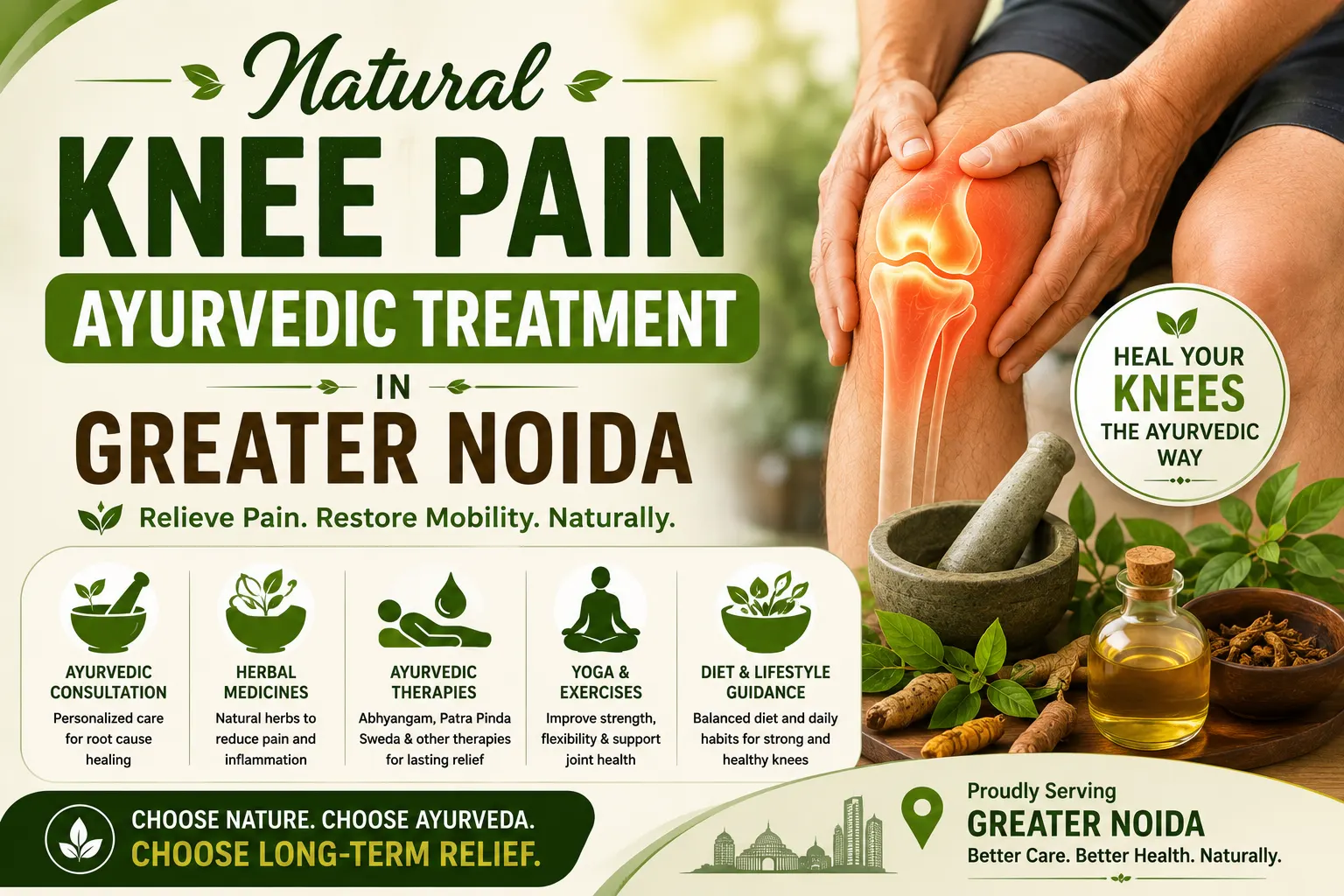
This part surprises people. Knee pain treatment in ayurveda isn't "take this one herb and you're sorted." It's more of a full-body fix, because Ayurveda works on the idea that your knee isn't misbehaving in isolation; your gut, your metabolism, your sleep, your daily habits, all of it is quietly tied to how your joints are doing.
1. The Herbs Actually Do Something
Shallaki (Boswellia serrata), Guggulu, Rasna, Nirgundi; these aren't just names your local Ayurvedic vaidya throws around to sound impressive. They genuinely have anti-inflammatory and joint-lubricating effects. There's a study from Phytomedicine (Kimmatkar et al., 2003) where Boswellia serrata extract noticeably reduced knee pain and improved how well the joint worked, compared to a placebo group. And the nice part; no stomach ulcers as a bonus prize, which is more than I can say for the painkillers I used to take before a long flight.
2. Panchakarma; Basically a Spa Day, But Medical
Therapies like Janu Basti (they literally build a little dam of dough around your knee and pool warm medicated oil inside it; sounds odd, feels amazing) and Abhyanga (a proper therapeutic oil massage) do wonders for circulation and stiffness. Honestly, the first time I saw Janu Basti being done, I thought it looked ridiculous. Then I tried explaining that to someone who'd actually had it done, and they just laughed and said "wait till you feel it." Fair enough.
3. What You Eat Actually Matters (Annoyingly)
Ayurveda cares a lot about your plate. Warm, freshly cooked meals, less cold and processed food, cutting down on the deep-fried stuff; yes, I know, nobody wants to hear this, but your knees genuinely do better on it. Think of it as bribing your joints with good behavior.
4. Medicine for Osteoarthritis in Ayurveda
For actual medicine for osteoarthritis in ayurveda, practitioners often lean on formulations like Simhanada Guggulu, Yograj Guggulu, and Maharasnadi Kwath. There's decent research behind this too; a study in Complementary Therapies in Medicine (Kulkarni et al., 1991) found real improvement in pain and disability scores among osteoarthritis patients on a herbomineral Ayurvedic formulation versus placebo. And a separate, fairly well-known study by Kuptniratsaikul et al. (2014) in Clinical Interventions in Aging pitted curcumin extract against ibuprofen for knee osteoarthritis; turns out curcumin held its own on pain relief, with fewer stomach-related side effects.
So no, this isn't just something your nani swears by out of habit. There's actual data behind it.
Modern Medicine vs Ayurvedic Treatment: A Quick (and Slightly Funny) Comparison
| Parameter | Modern Painkillers | Ayurvedic Treatment for Knee Pain |
| Speed of relief | Fast, like a caffeine shot | Gradual, like a slow-brewed chai; worth the wait |
| Root cause focus | Mostly symptom management | Targets root cause (dosha imbalance, weak joints) |
| Side effects | Possible stomach, kidney issues | Minimal, when taken under expert guidance |
| Long-term sustainability | Needs continuous dosage | Builds lasting joint strength over time |
| Lifestyle involvement | Optional | Non-negotiable; diet and habits matter |
Why People Keep Mentioning Karma Ayurveda for Knee Pain Treatment in Greater Noida
If you're in the area and looking around, you'll notice Karma Ayurveda for knee pain treatment in Greater Noida comes up a lot in conversations; and it's not just because of good marketing. What actually stands out is that consultations are personalized instead of the usual copy-paste treatment plan, and the Panchakarma setups follow classical methods rather than shortcuts. They also factor in your body type (Prakriti), which sounds like a small detail but genuinely changes what works for you versus what works for the next person. Your knee doesn't heal in a vacuum; your digestion and overall metabolism are quietly part of the story too.
A Few Honest Tips, No Filter
- Don't skip warming up before exercise. Your knees hate surprises, and they will let you know
- Extra weight means extra pressure on the joint; no way around this one, sorry
- If your knee's already acting up, ease off long sessions of cross-legged sitting or deep squats
- Stick with the treatment. Ayurveda isn't an overnight fix, and honestly, if someone promises it is, be a little suspicious
- Pair it with light movement; walking, gentle yoga, whatever keeps the joint from stiffening up
Key Takeaways
- Ayurvedic treatment for knee pain in Greater Noida addresses the root cause, not just the symptoms
- Herbs like Shallaki, Guggulu, and Rasna have scientifically documented anti-inflammatory benefits
- Panchakarma therapies like Janu Basti and Abhyanga improve circulation and joint nourishment
- Diet, weight management, and lifestyle changes are essential parts of the healing process
- Medicine for osteoarthritis in ayurveda has shown comparable results to conventional painkillers in several studies, with fewer side effects
- Consistency matters more than speed when it comes to natural healing
Wrapping This Up
Look, knee pain doesn't have to be something you just live with because "it happens with age." Between the right herbs, some proper Panchakarma therapy, and honestly just eating and moving a bit better, knee pain treatment ayurveda offers a way out that actually sticks; instead of just quieting the pain for a few hours and leaving you back where you started. So next time your knee creaks louder than the chair you're sitting on, maybe give this a real shot before reaching for another pill.
FAQs
Is Ayurvedic treatment effective for chronic knee pain?
Yes, when followed consistently under proper guidance, it can significantly reduce chronic knee pain and improve mobility over time.
How long does Ayurvedic treatment take to show results?
Most people notice visible improvement within 4 to 8 weeks, though this varies depending on severity.
Can Ayurveda cure osteoarthritis completely?
It can't magically regrow cartilage, but it can effectively manage symptoms, slow progression, and improve joint function.
Are there any side effects of Ayurvedic knee treatment?
Side effects are minimal to none when the treatment is taken under a qualified Ayurvedic practitioner's supervision.
Do I need to stop my current medication while taking Ayurvedic treatment?
Not necessarily, but it's always best to consult both your doctor and Ayurvedic practitioner before making any changes.
Disclaimer: This blog is for informational purposes only and should not be considered medical advice. Ayurvedic treatments can vary based on individual health conditions. Please consult a qualified Ayurvedic practitioner or physician before starting any new treatment, especially if you have existing health conditions or are on medication.