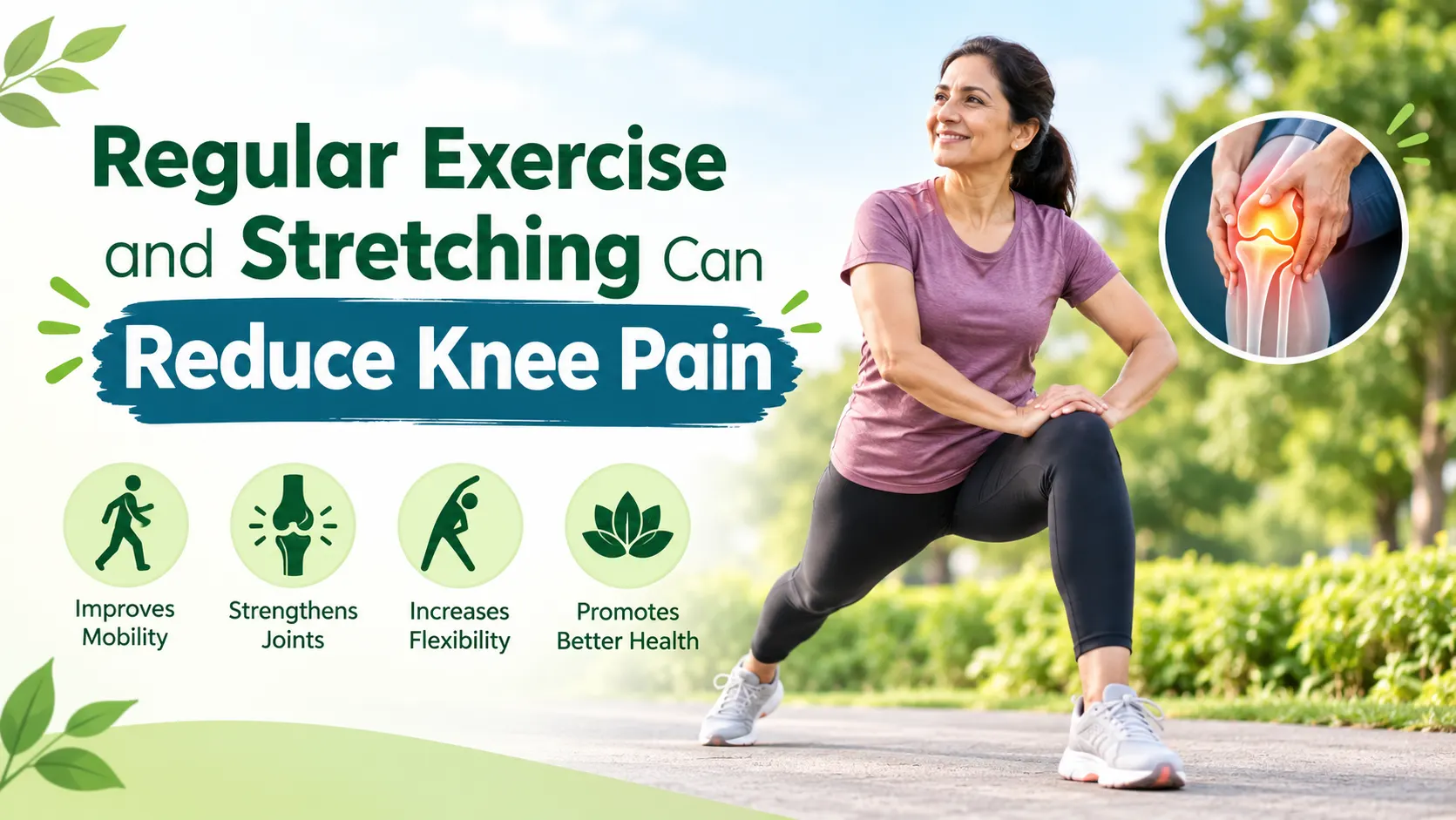
Short answer: yes, moving your knees on purpose actually helps them hurt less. Weird how that works, but here we are.
Okay, I know what you're thinking. "My knee pops like a microwave popcorn bag every time I stand up, and you want me to exercise?" Fair reaction. I had the same one when a physio first told me this. My gut instinct with a cranky knee has always been to treat it like a sleeping dog; don't poke it, don't wake it, just tiptoe around it and hope it forgets I exist. Turns out that's exactly the wrong move, and the research backs that up pretty loudly.
Your knees don't actually want to be left alone
There's this deeply human logic that says "it hurts, so stop using it." Makes sense for a sprained ankle you got yesterday. Makes way less sense for the slow, grinding, comes-and-goes kind of knee pain most of us are dealing with, usually from knee osteoarthritis.
A Cochrane review- and Cochrane doesn't mess around; they're basically the fact-checkers of the medical world- pulled together a mountain of trials and landed on this: exercise probably improves pain, physical function, and quality of life in people with knee osteoarthritis, at least in the short term. Not a miracle cure. Not "do 20 squats and never think about your knee again." Just... genuinely, measurably better.
Then in 2026, a much bigger review came along and basically confirmed it with receipts. Researchers went through 217 randomized trials with over 15,000 people and found aerobic exercise- walking, cycling, swimming- outperformed other exercise types for easing pain and improving movement in knee osteoarthritis. So the boring stuff: a walk around the block, some laps in the pool; wins. Not the trendy stuff. The boring stuff.
And here's a number that made me feel a lot less alone in this: almost 30% of adults over 45 already show signs of knee osteoarthritis on X-rays, and about half of them are dealing with real symptoms. So if your knees have opinions, you're basically in a very large, very unglamorous club.
Stretching does the quiet, unappreciated work
If exercise gets the spotlight, stretching for knee pain is the guy backstage making sure the lights actually turn on. Nobody claps for him, but the show doesn't happen without him.
Here's the logic: tight hamstrings, calves, and quads yank on the knee joint all day without you noticing, kind of like a backpack strap that's just a little too tight; you don't clock it until your shoulder's aching by 3 pm. Loosen those muscles and the knee stops getting pulled in directions it didn't sign up for. A 2024 review looking specifically at knee osteoarthritis found that both manual therapy and strengthening exercises reduced pain right after treatment, with manual therapy edging ahead in the short term. So hands-on work and stretching both earn their keep here.
What's actually worth doing
Not every kind of movement is going to do your knees any favors, and honestly some of it can make things worse. Here's what tends to show up again and again in the research as genuinely useful:
- Walking or cycling. Unglamorous, low-impact, and apparently the MVP of knee pain relief.
- Light strengthening. Quad sets, straight-leg raises, gentle mini squats; building muscle around the joint so it's not carrying the whole load itself.
- Range-of-motion work. Heel slides, seated knee bends; mostly about not letting the joint go stiff from disuse.
- Actual stretching. Hamstrings, calves, hip flexors; anything pulling on that joint from a distance.
- Balance and coordination drills. Helps the muscles around the knee share the workload instead of leaving it to fend for itself.
Even something as low-key as walking made a real difference in one study, where people 50 and older with knee osteoarthritis who walked regularly saw less frequent new knee pain. No fancy gear, no subscription app yelling at you to close your rings. Just walking.
The comparison table nobody asked for, but everyone secretly wants
| What you're doing | What it's actually doing | What your knee has to say about it |
| A daily walk or bike ride | Builds mobility, eases pain, low stress on the joint | "Honestly? Not bad. I could get used to this." |
| Mini squats, leg raises | Strengthens the muscles holding the joint together | "Fine. FINE. I'll admit I feel more stable." |
| Stretching hamstrings and calves | Releases the tension yanking on the joint | "Oh thank god, I've been tight since March." |
| Full-on avoidance and bed rest | Feels great for a day, gets stiff and unhappy fast | "Cute plan. I'm rusting over here." |
| Sprinting on a bad-pain day | Aggravates an already irritated joint | "Absolutely not. We are not doing this." |
Some ground rules, because nobody needs a setback
You don't need to train like you're prepping for a marathon. A short, sane approach beats a heroic, painful one every time.
- Ten or fifteen minutes of walking counts. It's not a warm-up; it's the workout.
- Warm up a little before you stretch. Cold muscles don't love being pulled on, same as you wouldn't love being woken up and immediately asked to do the splits.
- Sharp pain or swelling afterward means dial it back, not push harder.
- Little and often wins over occasional and brutal.
- If pain is sudden, severe, or getting worse, that's a "talk to a physio or doctor" situation, not a "push through it" one.
Also worth knowing: not everyone's knee responds the same way to the same routine, and that's not you doing it wrong. A study on pain sensitivity found that how well people respond to exercise therapy depends partly on things like their baseline pain sensitivity and whether they have neuropathic-type symptoms. So, if your cousin swears by yoga and it does nothing for your knee, that's just biology being annoyingly personal, not a character flaw.
Key takeaways
- Exercise for knee pain, especially walking, cycling, and swimming, has solid research behind it for easing pain and improving mobility.
- Stretching for knee pain loosens up the muscles that are quietly tugging on the joint all day.
- Light strengthening work like mini squats and leg raises gives the knee some backup.
- Total rest tends to backfire over time; gentle, regular movement holds up better.
- Everyone's knees are a little different, so patience matters more than pushing hard.
FAQs
Does walking make knee pain worse or better?
For most people with knee osteoarthritis, regular walking tends to ease pain over time rather than making it worse.
How often should I stretch if my knees hurt?
A few minutes most days, ideally after a light warm-up, tends to work better than one long stretch session a week.
Can strengthening exercises actually protect my knees?
Yes; stronger muscles around the knee, especially the quads, take some of the pressure off the joint itself.
Is it safe to exercise when my knee is already swollen?
Gentle movement is usually okay, but noticeable swelling or sharp pain means it's time to scale back and check in with a professional.
How soon will I actually feel a difference?
Some people notice a change within a few weeks of sticking with it, though full comfort can take a bit longer for others.
Disclaimer: This blog is written for general information, not as medical advice. Knees are complicated and everybody's are a little different, so please check with a doctor or physiotherapist before starting a new exercise or stretching routine, especially if you already have a knee condition or injury.