Short answer: vitamin D. If your knees sound like a bowl of cereal every time you sit down, chances are decent that low vitamin D has something to do with it.
I know, I know; vitamin D gets blamed for everything these days. Tired? Low D. Sad in winter? Low D. Can't focus? Also, low D, apparently. So, it's fair to be a little skeptical when someone tells you it's behind your knee pain too. But this one actually has real evidence behind it, not just wellness-influencer vibes and a ring light.
Knee pain is rarely caused by one single thing. Old injuries, extra weight on the joint, genetics, that one questionable decision to run a half marathon with zero training; it all adds up. Vitamin D isn't the whole story. But in people dealing with knee osteoarthritis specifically, it keeps showing up in study after study, which is more than you can say for most trendy health advice.
Okay, But What's Vitamin D Actually Doing In There?
Here's roughly how it works, minus the med-school jargon.
Vitamin D helps your body absorb calcium properly. No vitamin D, less calcium gets used, and your bones, including the ones forming your knee joint, end up a bit weaker than they should be. It also plays a role in muscle strength, particularly your quadriceps, and weak quads mean your knee joint has to pick up the slack. Not ideal, since knees weren't really built for that job.
There's also an inflammation angle. Low vitamin D has been tied to higher pain sensitivity, possibly because it messes with how your body handles inflammatory signals. And in a detail I did not expect to find interesting, some research has found vitamin D receptors sitting directly on cartilage cells in osteoarthritic knees, meaning this vitamin might be doing more than just supporting stuff from a distance. It might actually be talking to the joint itself.
So you've got weaker bones, weaker muscles, and more inflammation, all potentially stacking up because of one deficiency. Not great.
What Do The Actual Studies Say?
I don't love blog posts that just say "studies show" and move on, so here's the actual paper trail.
Researchers Muraki and colleagues, publishing in Osteoarthritis and Cartilage, found a real association between low vitamin D levels and both knee pain and visible signs of osteoarthritis on X-rays. Not just "patients said they felt worse"; actual imaging backed it up.
There's also a trial where people with knee osteoarthritis were given high-dose vitamin D3 weekly for two months. Once their vitamin D levels came back up, both their quadriceps strength and their pain scores improved, and the difference was statistically significant, not just a nice feeling. That study's on PubMed if you want to dig into it yourself.
A newer analysis from 2025 looked at knee osteoarthritis patients and found that a large majority were vitamin D deficient, with the deficiency being worse in people whose arthritis affected both knees rather than one. The researchers specifically called out women and older adults as groups who should be getting checked more routinely.
And a 2024 study using the Osteoarthritis Initiative database, published in Scientific Reports, added a wrinkle: men and people who started off more deficient seemed to get more noticeable pain relief from correcting their vitamin D levels than others did. So, it helps, but not identically for everyone; which, honestly, tracks with how most things in medicine work.
None of this is influencer science. It's peer-reviewed, published, and reasonably consistent across different research groups, which is about as good as it gets in nutrition research.
Is Vitamin D The Only One That Matters Here?
No, and I'd be lying if I said otherwise. A few other nutrients pull weight too, just with less name recognition.
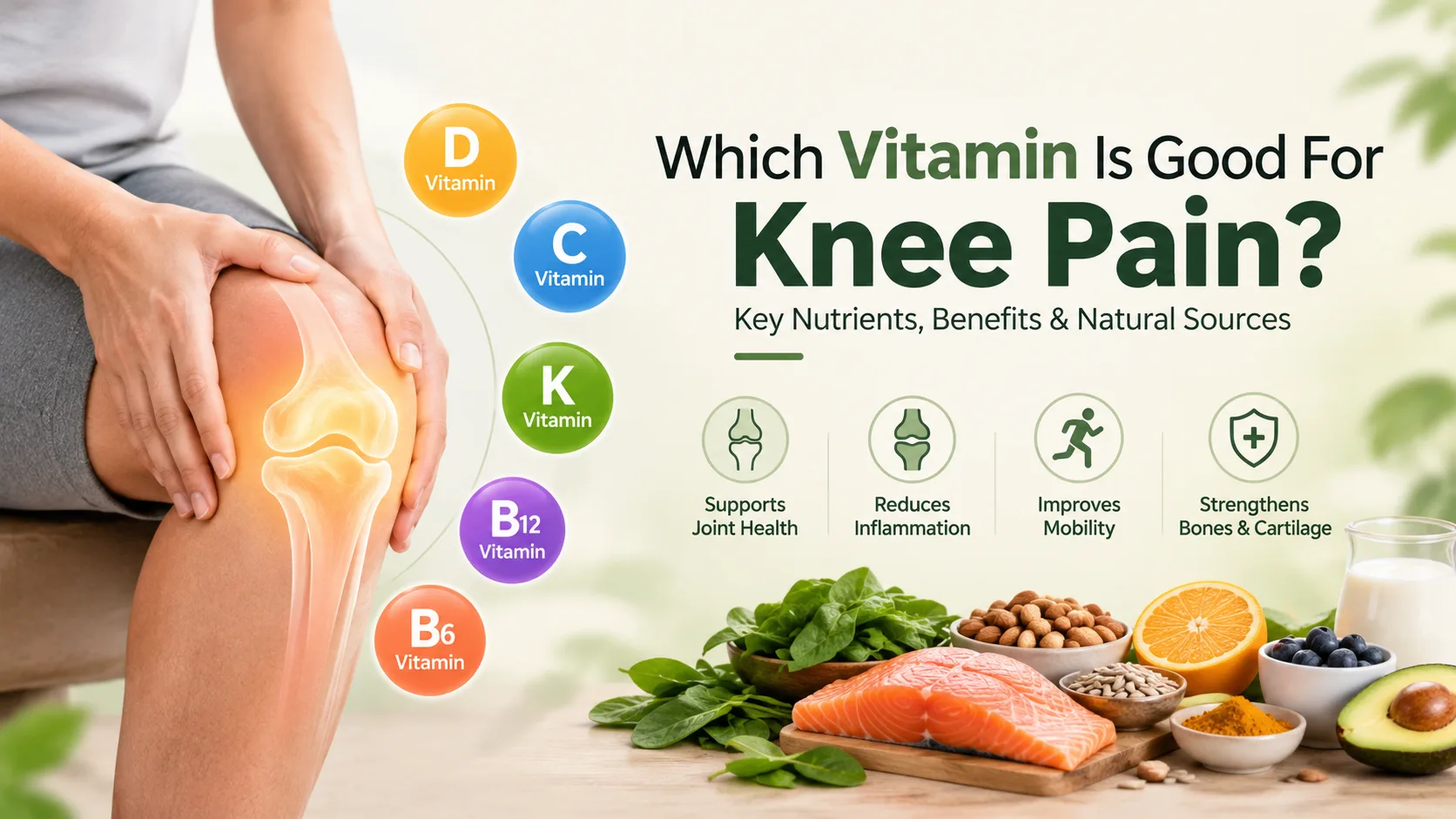
| Nutrient | What it does for your knees | How much credit it gets |
| Vitamin D | Bone strength, muscle support, calms inflammation | All of it, basically |
| Vitamin K2 | Sends calcium to your bones instead of your arteries | Criminally underrated |
| Vitamin C | Helps your body build collagen for cartilage repair | Quiet overachiever |
| Omega-3 fatty acids | Not a vitamin, but genuinely cuts joint inflammation | Should get more credit |
| Calcium | Bone density; but useless without vitamin D around | The sidekick nobody remembers |
Vitamin D keeps popping up as either the main event or the reason the others even work. That's not a coincidence, and it's why so much knee joint health research keeps circling back to it.
How Would You Even Know If You're Low?
You can't just guess based on how tired you feel or how much your knees ache. Those symptoms overlap with a dozen other conditions. The only real way to know is a simple blood test; your doctor will check your 25-hydroxyvitamin D levels, and you'll get an actual number instead of a hunch. Please don't decide you're deficient because a blog post made a compelling case. Get tested.
If it turns out you are low, don't self-prescribe some random dose you found online either. Vitamin D is fat-soluble, meaning your body stores it rather than flushing out the extra, and too much of it over time isn't harmless. A doctor can tell you the right dose for your actual levels.
Key Takeaways
- Vitamin D deficiency shows up repeatedly in studies on knee pain, especially in knee osteoarthritis.
- Low vitamin D can mean weaker bones, weaker thigh muscles, and more inflammation around the joint.
- Real published research (Muraki et al., PubMed trials, 2024–2025 osteoarthritis studies) backs this up, not just internet chatter.
- Vitamin K2, vitamin C, omega-3s, and calcium all support joint health too, just with less spotlight.
- A blood test is the only real way to know your vitamin D status; don't guess.
- Talk to a doctor before starting supplements, especially since too much vitamin D isn't harmless either.
FAQs
Does low vitamin D actually cause knee pain?
It's strongly linked to it, especially in people who already have knee osteoarthritis, though it's usually one factor among several.
How much vitamin D should I take for knee pain?
There's no one-size-fits-all number; get your levels tested and let a doctor decide the right dose for you.
Can vitamin D fix osteoarthritis completely?
No, it won't reverse joint damage that's already happened, but correcting a deficiency can ease pain and support muscle strength.
What foods have vitamin D for joint health?
Fatty fish, egg yolks, fortified milk, and some mushrooms, plus a reasonable amount of sunlight.
Are a lot of people with knee pain actually low on vitamin D?
Yes, it's more common than you'd think, especially among older adults and women.
Disclaimer
This article is meant for general information, not medical advice. It isn't a replacement for seeing an actual doctor. If you're dealing with ongoing knee pain, please get properly evaluated instead of self-treating based on something you read online; even this.