Short answer: your knee is puffy because fluid has decided to move in and set up camp, usually thanks to injury, overuse, or arthritis, and no, it's not permanent unless you ignore it for the next decade.
Okay, longer answer now. I've had my own knee blow up like a stress ball more times than I'd like to admit; once after a "quick" trek that turned into three hours of stairs disguised as a mountain; and every time, the first thought is always the same: is this serious, or am I being dramatic? Usually it's somewhere in between. Let's actually get into it, minus the panic.
So Why Does the Knee Even Swell Up? Call Now
Picture your knee joint as a small, tightly run office. Cartilage is the flooring, synovial fluid is the office coffee that keeps everything moving smoothly, and ligaments are basically the walls holding the whole setup together. The moment something goes wrong in there; a twist, an injury, too many squats on a Monday because you felt "motivated"- the body sends in extra fluid as a sort of emergency repair crew. That fluid buildup is your swelling. Annoying, yes. Random, not really.
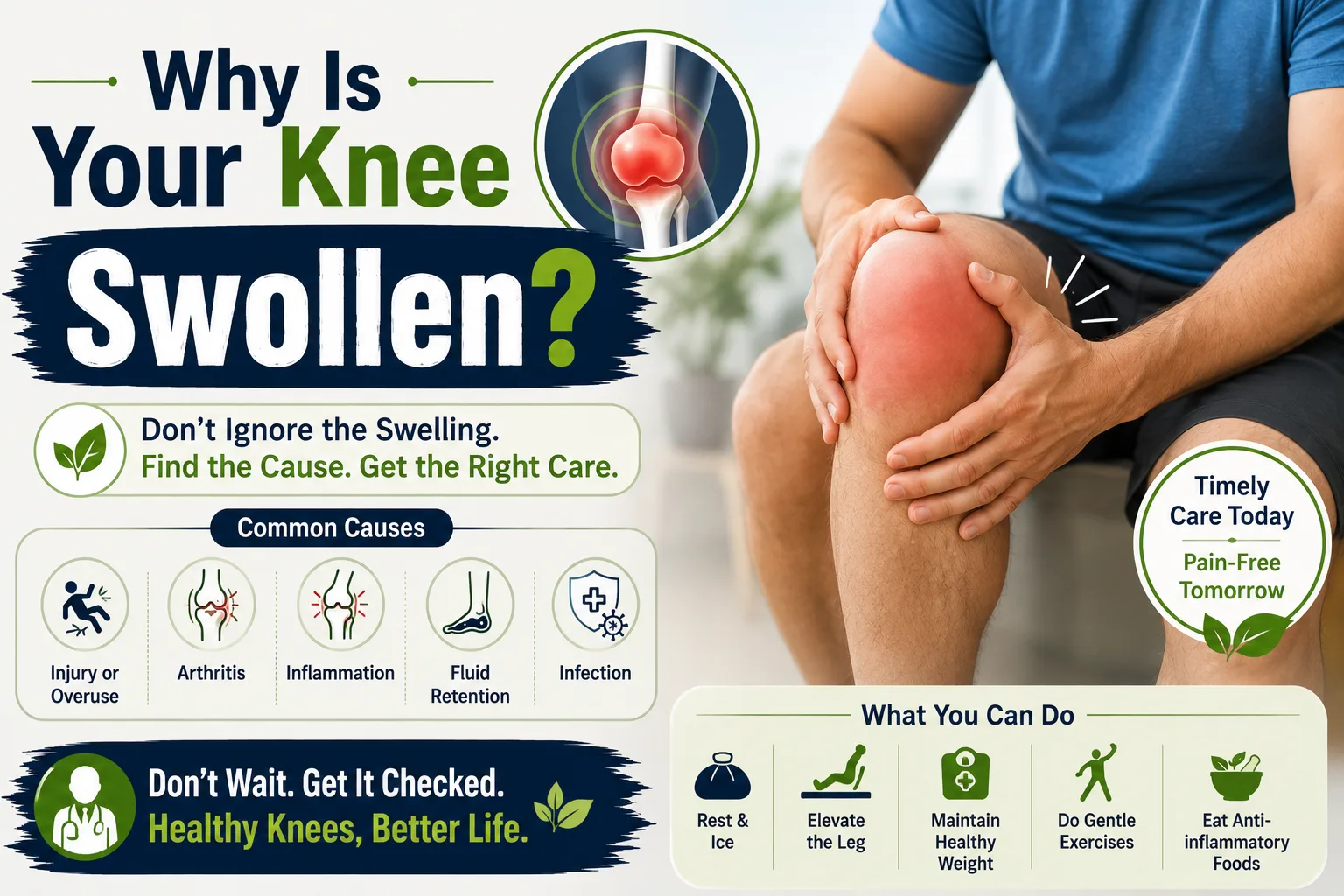
A few usual suspects behind knee swelling:
- Osteoarthritis; the slow, quiet wear-and-tear that shows up uninvited around your 40s
- Injury or trauma; a fall, an awkward landing, a badminton match you took way too seriously
- Overuse; too many stairs, not enough rest days, your knees keeping score
- Gout or infection; comes with heat, redness, and a lot more drama than a regular ache
- Bursitis; inflammation of those tiny cushioning sacs around the joint
If your knee's been puffing up on and off, feels stiff by evening, or just generally acts like it's holding a grudge against you, it's not being moody for no reason. It's asking for a different kind of attention than "just rest it and take a painkiller."
Why So Many People Are Quietly Going Back to Ayurveda?
Here's something I've noticed: a lot of folks with chronic knee issues eventually get tired of the cycle of painkillers wearing off and problems creeping back. That's usually around when someone's aunty, uncle, or well-meaning neighbour brings up Ayurveda. And honestly? It's not just old-school talk anymore.
Ayurvedic treatment for knee swelling doesn't stop at masking the pain. It tries to figure out why the joint is acting up in the first place. In Ayurveda, this is largely blamed on an aggravated Vata dosha paired with toxin buildup, called Ama, settling right into the joint. Instead of one pill doing all the work, the approach spreads across herbs, external therapies, food, and daily habits.
This is really the heart of knee swelling treatment in Ayurveda methods; it's less "quick fix" and more "let's actually sort this out properly."
What This Usually Looks Like in Practice? Book Your Consultation Now
- Herbal formulations with Shallaki (Boswellia serrata), Guggulu, and Rasna; all with genuine anti-inflammatory reputations
- Janu Basti; warm medicated oil pooled right over the knee. Sounds fancy, feels like a mini spa session, works surprisingly well
- Abhyanga (oil massage) to get blood flowing and loosen up stiffness
- Diet tweaks: cutting down on cold, overly processed, and heavily spiced food that tends to aggravate Vata
- Gentle movement or yoga so the joint stays mobile without getting overworked
And this isn't just anecdotal chai-table wisdom. A study by Kimmatkar et al., published in Phytomedicine back in 2003, found that Boswellia serrata extract noticeably reduced knee pain and swelling in osteoarthritis patients compared to a placebo, with some people noticing a difference in as little as a week. Then there's a 2014 trial by Kuptniratsaikul and colleagues in the Journal of Alternative and Complementary Medicine, which compared curcumin extract to ibuprofen for knee osteoarthritis and found pretty similar pain relief, without the stomach trouble ibuprofen sometimes brings along. So yes, there's actual research sitting behind what sounds like "grandma's remedy."
What Actually Happens During Knee Joint Treatment in Ayurveda?
If you've never sat through an Ayurvedic consultation, it's a bit different from a rushed five-minute clinic visit. Expect questions that seem to have nothing to do with your knee at first: your sleep, digestion, stress levels, daily routine. That's on purpose. Knee joint treatment in Ayurveda treats the body as one connected system, not a knee floating around by itself, unrelated to everything else going on in your life.
Based on your body type, or Prakriti, and how bad the swelling is, the practitioner usually mixes internal medicines with external therapies. It's personal, not copy-pasted from the last patient. That's probably why people who try it properly tend to stick around.
Common Medicine for Knee Swelling in Ayurveda
A few names come up again and again when people search for medicine for knee swelling in Ayurveda:
- Simhanad Guggulu; a regular go-to for joint pain and swelling
- Mahayograj Guggulu; used for chronic stiffness and long-standing joint trouble
- Rasnasaptak Kwath; an herbal decoction known for calming inflammation
- Dashmoolarishta; helps with joint strength and reducing Vata imbalance
One honest word of caution here; please don't just walk into a store and buy these like they're vitamin C tablets. These work best when a qualified practitioner actually looks at your case and decides the right combination and dosage. Guesswork isn't the move here.
Ayurveda vs Modern Medicine: Let's Be Real About This Call Now
| Factor | Ayurvedic Approach | Modern Medicine Approach |
| Focus | Root cause, whole-body balance | Fast symptom control |
| Speed | Slow and steady, like a Sunday afternoon | Quick, like a 2-minute noodle fix |
| Side effects | Usually mild if guided properly | Sometimes rough on the stomach |
| Long game | Herbs + lifestyle + therapy | Medication, occasionally surgery |
| Overall mood | Warm oil, patience, chai in between | Efficient, clinical, no small talk |
Honestly, this isn't a "pick a side" situation. Loads of people quietly do both, under proper guidance, and get the best of each.
A Few Things That Genuinely Help Day-to-Day
- Keep an eye on your weight; every extra kilo adds pressure your knees didn't sign up for
- Skip long sessions of sitting cross-legged or squatting while swelling is active
- Warm compress beats a cold one when Vata-related stiffness is the culprit
- Keep moving gently; a stiff knee left completely alone just gets stiffer
- Don't ghost your follow-ups the moment it "feels a little better." That's usually when people relapse.
Key Takeaways
- Knee swelling is mostly your body's way of reacting to injury, overuse, arthritis, or inflammation
- Ayurvedic treatment for knee swelling goes after the root cause instead of just numbing the pain
- Herbs like Boswellia, Guggulu, and Rasna actually have research backing their anti-inflammatory effects
- Knee joint treatment in ayurveda is personalised, based on your body type and how severe things are
- The right medicine for knee swelling in ayurveda, paired with lifestyle changes, tends to give lasting relief
FAQs Book Your Consultation Now
Is Ayurvedic treatment actually effective for knee swelling?
For most people, yes, especially when it's paired with consistent lifestyle changes and not treated as a one-time fix.
How long before Ayurvedic treatment shows results?
Usually a few weeks of sticking with it, since this route works gradually rather than overnight.
Can Ayurveda and modern medicine be used together?
Yes, and plenty of people do exactly this, just make sure both your doctors know what the other is prescribing.
Are Ayurvedic medicines safe to use long-term?
Generally yes when taken under a practitioner's guidance, but self-medicating on your own isn't a great idea.
What foods make knee swelling worse?
Cold, oily, overly processed, and very spicy foods tend to stir things up more, so it's best to go easy on those.
Disclaimer: This blog is written for general awareness and isn't meant to replace professional medical advice. Knee swelling can have several underlying causes, so please talk to a qualified doctor or Ayurvedic practitioner before starting any treatment.